First aid II
BASIC SCIENCE JSS2 first term
Sub-Theme: Safety
WEEK 2
First aid II
Performance objectives
Students should be able to:
- Discuss the ABC of first aid and its application
Content
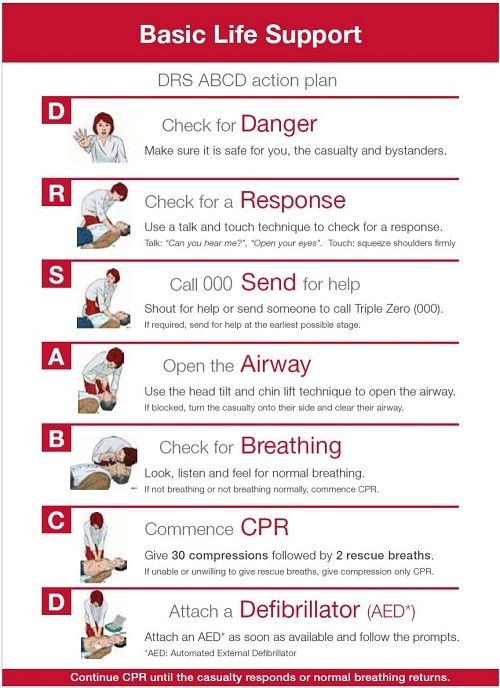
ABC of first aid
The priorities of first aid are
A AIRWAY
B BREATHING
C CIRCULATION (and bleeding)
Only then look at burns and broken bones.
A- Airway
The airway of an unconscious person may be narrowed or blocked, making breathing difficult and noisy or impossible. This happens when the tongue drops back and blocks the throat. Lifting the chin and tilting the head back lifts the tongue away from the entrance to the air passage. Place two fingers under the point of the person’s chin and lift the jaw, while placing your other hand on the forehead and tilting the head well back. If you think the neck may be injured, tilt the head very carefully, just enough to open the airway.
B Breathing
Check for breathing by placing your head near the person’s nose and mouth. Feel for breath on your cheek or moisture on the back of your hand.
FIRST THINGS FIRST
In an emergency any number of things may need your attention at the same time. If you try to do everything at once you may easily get distracted from the essential matters. On arriving at the scene…
1. Assess the situation
- Take in quickly what has happened.
- Look for dangers to yourself and to the casualty
- Make the area safe
2. Assess casualties
- An unconscious person always takes priority and needs immediate help to make sure he or she can breathe
Only then should you begin to assess any injuries
If a person has just stopped breathing use mouth to mouth ventilation. Make sure the airway is open and head tilted back. Pinch the nostrils together, take a deep breath and blow into the mouth, firmly sealing your lips around the mouth so air is not lost. You should see the chest rise.
Remove your lips and let the chest fall. Continue this, giving about ten breaths every minute until help arrives or breathing begins.
C Circulation
Check for circulation (to see if the heart is still beating) by feeling for the Adam’s apple (lump on the windpipe) with two fingers. Slide the fingers to the side of the windpipe and feel for the pulse. If the heart has stopped beating, use chest compression to try to restart the heart. Place your hand flat just above the point where the ribs meet the breastbone. Bring the other hand on top of it and lock your fingers together. With your arms straight, press down firmly on the breastbone, pushing it down by 4–5 cm. Release the pressure and repeat the compressions at a rate of about 80 per minute. If the person is also not breathing, alternate 15 compressions with two breaths until help arrives.
Stop bleeding by applying firm pressure to the wound for about 15 minutes. Never use a tourniquet.
The Recovery Position
This is the best position for an unconscious person or someone having a fit. It allows them to breathe easily and prevents them from choking. After checking the ABC, bend the nearest arm to you, putting the hand by the head. Then bring the far arm across the chest and hold both hands in one of yours. With your other hand pull the furthest leg up at the knee and roll the person towards you to lie in this position.