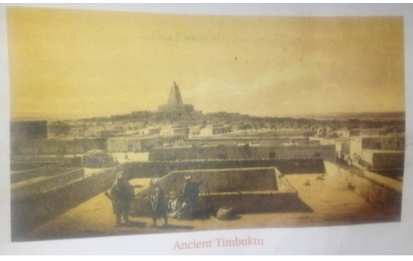
Socio-Political Structure of the Ancient Mali Empire
Week 3 & 4
TOPIC: Socio-Political Structure of the Ancient Mali Empire
The ancient Mali Empire operated a form of constitutional monarchy. It was ruled bya supreme leader who bore the title, Mansa. The empire was very large and had many groups of people with different social statuses, cultures and languages. After Sundiata Keita conquered the Susu and some other territories, Mali, which was formerly comprised of Niani, Mema, Wagadou and twelve other territories called the twelve doors of Mali, submitted power to Keita and his descendants because the people admired his military prowess and also feared for their kingdoms.
The administration of the empire was also decentralised. In agreement with Sundiata Keita, each territory retained some of their culture, control, rights and privileges, but they all ruled under the authority of the Mansa.
The governors of each territory were referred to as Farin and Ba, with Farin meaning northern commander. Therefore, the empire was divided into provinces with each having a governor who reported to the Mansa.
The provinces were required to generate revenues and pay tributes to the king to make control and administration easier.
There were major reforms instituted by the Mansa. The reforms cut across many sectors of the empire. The Mansa made exchange rates for commodities fixed and fairly stable, divided lands among the people to meet their needs, passed laws against the mistreatment of slaves and inmates, appointed women to political offices, and properly delegated authority between clans and clan-heads.
1. Sundiata Keita
Sundaita Keita established the ancient Mali Empire in 1235 after many city-states seceded from the defunct Ghana Empire. He was a refugee prince living in Mema when he was consulted by his people. The Malinke people sought his help after the king of Susu terrorised them and held them captive. As a recognised prince in the region, Sundiata Keita raised armies from Wagadou, Mema and other city-states to wage war against the king of Susu. The war was called the Battle of Kirina in the history of the ancient Mali Empire.
Sundaita Keita won the battle against King Soumaoro Kanté of Susu. The people sang Keita's praise and referred to him as their emperor and overall leader. At the age of eighteen, he united Mali, Mema, Wagadou and twelve other city-states, then assumed the title Mansa. Thus, Sundiata Keita became the first Malinke Mansa of the ancient Mali Empire, adopting the name Mari Djata.
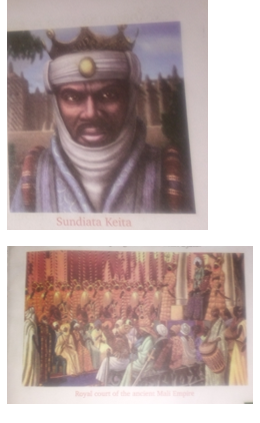
During his reign as emperor, he made the empire concentrate on trade and agriculture. He extended the boundaries of the empire by a thousand miles to the east and west. He also added Wangara goldfield to the southern border of the empire and conquered other city-states such as Oualata and Awdaghust, making them a part of the northern border.
He reorganised the Trans-Saharan trade with the help of the Berber people, who were more experienced. Having conquered Ghana, he took over the salt and gold trades. The Berber people were North African merchants who led desert caravans through the Sahara.
2. Mansa Musa
After the death of Sundiata Keita, three Mansas ruled the empire, but none was as prominent as Mansa Musa, who was the grandson of one of Sundiata's brothers. He ascended the throne in 1312 and accomplished a lot during his reign. As a devout Muslim, he tried to make Islam the religion of the noble class, but he did not force it on the citizens. He understood Arabic, observed Ramadan and celebrated all Islamic festivals, making them imperial ceremonies.
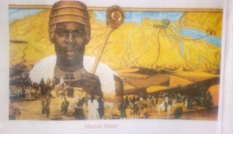
He travelled all the way from Africa to Mecca in great splendour, pomp and pageantry. He travelled with five hundred slaves, each carrying a six-pound staff of gold, a caravan of two hundred camels carrying 30,000 pounds of gold, with many foods, clothing and supplies. It was a very impressive feat for a king during the medieval era, and as a result, the world recognised Mansa Musa and the ancient Mali Empire.
During his two-year trip between 1324 and 1326, he did charitable works by helping the poor and giving out alms in gold and other items. He gave alms to the extent that he exhausted his store and supplies and had to take a loan for his return journey.
Mansa Musa saw the importance of quality education, learning and architecture, so he returned to Mali from Mecca with poets, scholars, architects, etc. He also sent scholars to study in Morocco, and when they returned, they set up schools and learning centres across the empire for the study of the Holy Quran and the Arabic language. The experienced architects he brought to the empire helped to improve the quality and designs of buildings and other structures in major city centres, such that impressive palaces and mosques were built in Gao and Timbuktu.