
PESTS AND DISEASES OF CROPS- LIFE CYCLE OF PESTS
BIOLOGY SSS 2 THIRD TERM
WEEK TWO
PESTS AND DISEASES OF CROPS- LIFE CYCLE OF PESTS
PERFORMANCE OBJECTIVE
Students should be able to;
- Describe some common disease caused by pests
- Describe pest control measure
- Describe the life cycle of some of the pest
CONTENT
All living organisms go through some form of the life cycle. For pests around your home and business, it is essential to understand how the pest life cycle works. For effective pest control, you have to break the life cycle of the pest. This involves multiple, targeted pest control treatments over a serious of months at times. An annual pest control treatment plan is your best tool for solving pest problems.
What is the pest life cycle?
To put it plainly, a pest’s life cycle is the time it takes for an egg to grow, mature, and produce new eggs. Most insects follow three definite stages in their life cycle: Growth, Maturation, and Reproduction.
GROWTH
Once an egg is laid, it goes through a growth stage. Pests that have a shorter life expectancy typically experience rapid growth from egg to reproducing organism. Mice are a good example of this. Some insect populations have multiple, distinct intervals within the growth stage, such as Black Widow spiders. Black widows go through a nymph stage after hatching, before becoming a juvenile, and then finally a fully mature adult. During the growth stage, pests are at their most vulnerable to predators, but can be more difficult to target for pest control.
MATURATION
After initial growth, many insects will experience a juvenile stage. This can be a rapid process of only a couple of weeks to 2-3 months. These sub-adults may have some of the features of adults of their species, but typically they look physically different (whether it be size or colouring) and most importantly they lack sexual maturity. External factors, such as a drought can also speed up the process. You may have noticed this summer that there are an awful lot of spiders hanging around.
REPRODUCTION
The successful completion of a pest’s life cycle ends in their full maturity and the production of offspring. Many pests reach the end of their life cycle when they reproduce. Some pests will produce multiple generations of offspring over several years, such as the Wolf spider, increasing their bloodline’s chances of survival. This is all the more reason to control your local pest population as they can and will grow exponentially.
Insects either have a complete or incomplete life cycle. Insects in the complete life cycle group have four distinct stages, the egg, larvae, pupae and adult. Examples of these insects are beetles and moths. Beetles lay their eggs either singly or in groups, and they hatch into either grubs or larvae that move about freely on the plant-feeding on roots, tubers, leaves, or fruits. After reaching maturity, they then pupate (the resting stage) and develop into adults. Adult beetles also may damage plant parts, so two damaging stages may exist.
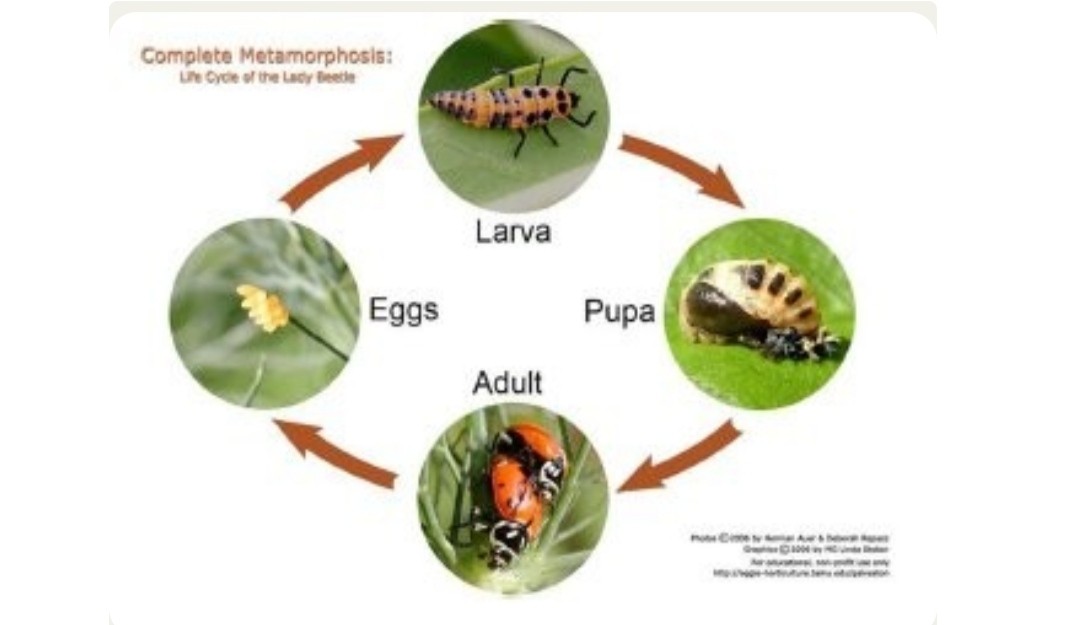
Moths and butterflies also have a complete life cycle similar to beetles except that the damaging stage is the larvae or worm stage which usually feeds on the stems, leaves or fruits. The adult stage, moths and butterflies, feed on nectar or may not feed at all. Insects with a complete life cycle almost always have a chewing mouthpart.
Insects with incomplete life cycles include grasshoppers and true bugs (stink bug and squash bugs). Many insects in this category have piercing, sucking mouthparts and suck juice from plants. Some, such as the grasshopper, chew on leaves and stems. Regardless, insects with an incomplete life cycle are unique in that they hatch from eggs into tiny nymphs that resemble the adult stage. They stay in the nymphal stage for several weeks, while growing and moulting into larger insects until they reach adulthood. Adults have fully developed wings and can fly great distances. Nymphs either do not have wings or have wings that cannot be used for flight.
Insects with an incomplete life cycle can be controlled at any stage, but are easier to control in the nymphal stage just after they hatch from the eggs.
Pests Control
Pest Control is grouped into;
- Chemical control
- Cultural Control
- Mechanical control
- Biological control
Pest Control with a Minimum of Chemicals
The “if a little is good, more will be better” attitude leads to a serious misuse of pesticides. Overuse of pesticides has several adverse effects:
- Food products may contain unsafe pesticide residues if improperly treated with pesticide.
- Beneficial insects, earthworms and birds may be harmed or killed along with harmful insects if pesticides are carelessly used.
- Each time producers spray they expose themselves to the possibility of inhalation or absorption of the toxin.
- Careless use of pesticides near water may contaminate water supplies.
- Misuse of pesticides can lead to the development of chemical resistance in the target pest.
- The use of pesticides can lead to outbreaks of secondary pest species.
A growing public concern over the use and misuse of pesticides has led to increasing numbers of vegetable producers to seek means of natural pest control. Although some people do not have the time or knowledge to practice all available alternative methods for controlling pests, there are many cultural practices which will help reduce losses. Proper soil preparation, careful plant selection and good cultural practices can be combined with biological and mechanical controls to reduce the need for chemical pesticides.
Temperature, humidity, precipitation and natural enemies all influence insect populations. In some years, troublesome insects may not be numerous enough to significantly damage plants. In other years, large insect populations may cause serious damage or destroy host plants.
Effective control of specific insects must be preceded by proper identification of these insects. Once an insect’s identity is known, you can learn about its life cycle, seasonal cycle, habits and host plants, and thus exercise more effective control measures.
Several control methods are often combined to minimize damage by insect pests. Since insect control methods vary in their effectiveness, you may wish to select alternative methods to correspond with differences in plant growth and productivity, insect damage, weather conditions and cultural practices. Various control methods will now be considered.
Resistant Plant Varieties
Use available plant species or varieties which are resistant to, or at least tolerant of, insect activity. Insect resistance in plants frequently is interpreted as meaning “immune to insect damage.” It is a term for distinguishing plant varieties which exhibit less insect damage when compared to other varieties under similar growing and pest population conditions. Some varieties may be less “tasty” to insect pests, or may possess certain physical or chemical properties which discourage insect feeding or egg-laying, or may be able to support large insect populations without suffering appreciable damage.
Before buying seeds or plants, check with your local county Extension agent for information on resistant varieties which will grow well in your area. Examples of vegetable varieties that have shown resistance to specific insect pests are listed in Table VI-1. Some varieties may be resistant to insect attack, but may be subject to certain restrictions such as soil pH, drainage or temperature. Your experience with different varieties will indicate the ones best suited for your operation.
- Cultural Controls
Many cultural practices can be used to reduce the potential for or actual damage of plants caused by insects:
Ploughing and cultivating exposes soil insects to adverse weather conditions, birds and other predators. Also, deep ploughing will bury some insects and prevent their emergence. Crop rotation can be effective against insects that develop on a narrow range of food plants and also against insects with short migration ranges. Movement of crops to different sites will isolate such pests from their food source. If an alternate site is not available, then change the sequence of plants grown in the field. Do not plant members of the same plant family in the same location in consecutive seasons. For example, do not follow melons with cucumbers or squash. Proper use of fertilizers and water will induce healthy plant growth and increase the capability of plants to tolerate insect damage. However, excessive amounts of organic matter or manure can encourage millipedes, pillbugs, white grubs and certain other pests.
Changes in planting or harvesting time often will reduce plant damage or keep insect pests separated for susceptible stages of the host plant. Delayed planting, until the soil is warm enough for corn and bean seeds to germinate quickly, reduces seed maggot damage. Hot caps or row covers placed over plants used during the early season not only will preserve heat, but also will protect plants from damaging wind, hail and insects. In some situations, a healthy transplant will overcome insect damage more easily than a small plant developing from seed in the field.
Removing soil residues and disposing of weeds and other volunteer plants eliminates food and shelter for many insect pests such as cutworms, webworms, aphids, white grubs, millipedes and spider mites. When plants stop producing, till them into the soil or take them to the compost pile.
Companion planting (an orderly mixing of crop plants) is a cultural practice aimed at diversifying insect populations. Numerous claims have been made about the ability of certain plants to protect certain other plants from insect damage. However, no data from scientific studies are available to prove the value of companion plantings.
- Mechanical Control Methods
Preventive devices often are easy to use, although their effectiveness varies. Here are examples of such devices:
- Cheesecloth or spun bound polyester row covers for plant beds, hotbeds and cold frames to prevent insect egg-laying.
- Mesh covers for tomatoes and other plants to keep out large insects and birds.
- Aluminium foil mulch to repel aphids.
Blacklight traps are effective tools for monitoring insect species in a given area, but usually provide little protection for the crop. Light traps attract both harmful and beneficial insects that ordinarily would not be found in the area. Attracted insects may not be caught in the traps, but may remain in the area, and the harmful ones may cause damage later. Also, some species such as wingless insects and those insects only active in the daytime are not caught in the traps. Consequently, the value of blacklight traps is questionable. Where black lights are used, it is recommended that they be placed 50 to 75 feet away from the area which is to be protected.
- Biological Control Methods
Generally, biological control can be defined as the direct or indirect use of parasites, predators or pathogens (bacteria, viruses, fungi protozoans) to hold pest insect populations at low levels to avoid economic losses. Biological control methods fall into three categories:
- Introduction of natural enemies which are not native to the area (these enemies must then establish and perpetuate themselves).
- Enlarging existing populations of natural enemies by collecting, rearing and then releasing them back into the environment.
- Conservation of beneficial organisms by such means as the judicious use of pesticides and the maintenance of alternate host insects, so parasites and predators can continue to develop.
Many beneficial organisms occur naturally around crops, but often they are not numerous enough to control a pest before it inflicts severe damage. Parasites and predators appear to be most effective when a pest population has stabilized or is relatively low. Their influence on an increasing pest population usually is minimal since any increase in parasite and predator numbers depends on an even greater increase in pest numbers. Pathogens, however, seem to be most effective when pest populations are large. Consequently, the nature of the host insect-natural enemy relationship makes it impossible to have an insect-free environment and at the same time maintain sizable populations of beneficial insects.
The following is a list of some of the more popular biocontrol agents:
- Bacillus thuringiensis: (Dipel, Thuricide, Biological Worm Killer). This bacterial insecticide provides effective control of the larvae of several moths and butterflies. The bacterial spores are harmless to warm-blooded animals and beneficial insects.
- Bacillus popilliae: (Milky Spore, Doom, Japedimic). This bacterial insecticide controls grubs of Japanese beetles in the eastern U.S., and some testing has been done for control of white grubs (Phyllophaga spp. and Cotinis spp.) in Texas. It has not been effective against the principal white grub species in Texas.
- Nosema locustae: A spore (Protozoan) used to control grasshoppers. The material is sprayed on the plants which grasshoppers ingest. The spores germinate inside the grasshopper, causing death. Control is extremely slow and growers may not be satisfied with results. Baits have proven more effective.