
REPRODUCTIVE SYSTEM AND REPRODUCTION IN HUMANS
BIOLOGY SSS3 FIRST TERM
WEEK ONE
REPRODUCTIVE SYSTEM AND REPRODUCTION IN HUMANS
PERFORMANCE OBJECTIVE
Students should be able to;
- Explain the parts and functions of the reproductive system
- Draw a detailed structure of a male and female gametes (sperm and ovum)
CONTENT
The reproductive system is the human organ system responsible for the production and fertilization of gametes (sperm or eggs) and, in females, the carrying of a fetus. Both male and female reproductive systems have organs called gonads that produce gametes. A gamete is a haploid cell that combines with another haploid gamete during fertilization, forming a single diploid cell called a zygote. Besides producing gametes, the gonads also produce sex hormones. Sex hormones are endocrine hormones that control the development of sex organs before birth, sexual maturation at puberty, and reproduction once sexual maturation has occurred. Other reproductive system organs have various functions, such as maturing gametes, delivering gametes to the site of fertilization, and providing an environment for the development and growth of an offspring.
Sex Differences in the Reproductive System
The reproductive system is the only human organ system that is significantly different between males and females. Embryonic structures that will develop into the reproductive system start the same in males and females, but by birth, the reproductive systems have differentiated. How does this happen?
Sex Differentiation
Starting around the seventh week after conception in genetically male (XY) embryos, a gene called SRY on the Y chromosome initiates the production of multiple proteins. These proteins cause undifferentiated gonadal tissue to develop into male gonads (testes). The male gonads then secrete hormones — including the male sex hormone testosterone — that trigger other changes in the developing offspring (now called a fetus), causing it to develop a complete male reproductive system. Without a Y chromosome, an embryo will develop female gonads (ovaries) that will produce the female sex hormone estrogen. Estrogen, in turn, will lead to the formation of the other organs of a normal female reproductive system.
Sex Hormones and Maturation
Male and female reproductive systems are different at birth, but they are immature and incapable of producing gametes or sex hormones. Maturation of the reproductive system occurs during puberty when hormones from the hypothalamus and pituitary gland stimulate the testes or ovaries to start producing sex hormones again. The main sex hormones are testosterone in males and estrogen in females. Sex hormones, in turn, lead to the growth and maturation of the reproductive organs, rapid body growth, and the development of secondary sex characteristics, such as hair in males and breasts in females.
Male Reproductive System
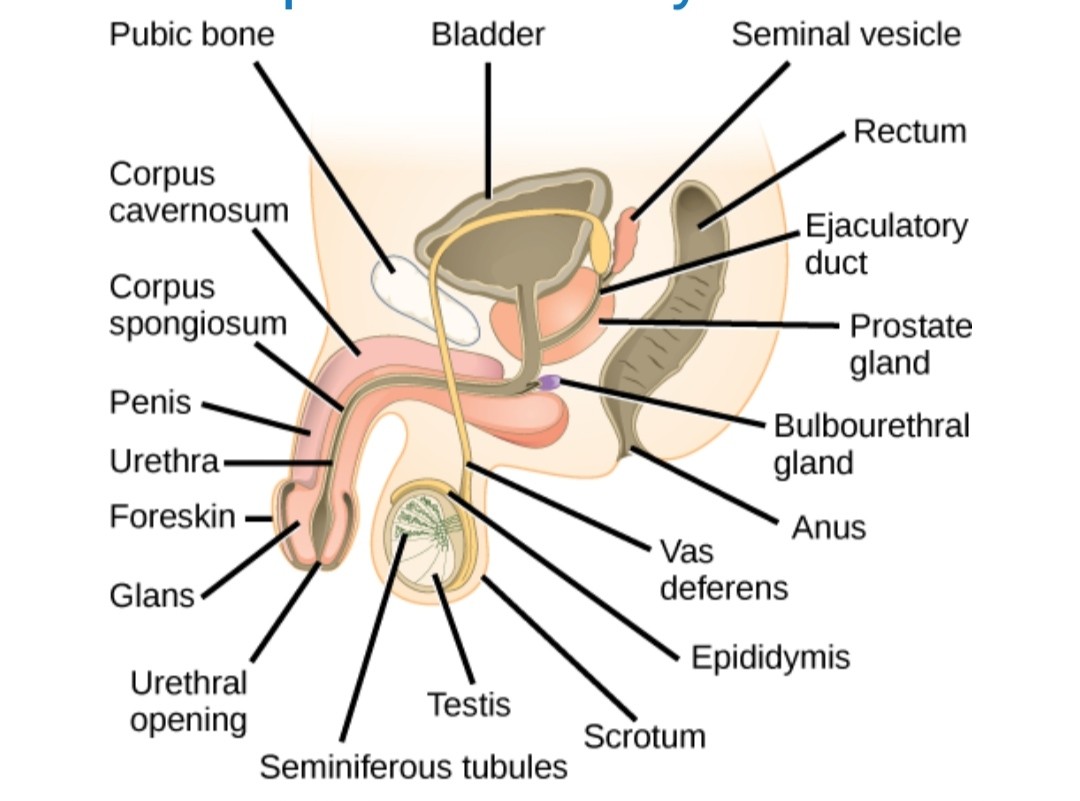
The main structures of the male reproductive system are external to the body and illustrated in the figure above. The two testes (singular, testis) hang between the thighs in a sac of skin called the scrotum. The testes produce both sperm and testosterone. Resting atop each testis is a coiled structure called the epididymis (plural, epididymis). The function of the epididymis is to mature and store sperm. The penis is a tubular organ that contains the urethra and can stiffen during sexual arousal. Sperm passes out of the body through the urethra during a sexual climax (orgasm). This release of sperm is called ejaculation.
In addition to these organs, the male reproductive system consists of several ducts and glands that are internal to the body. The ducts, which include the vas deferens (also called the ductus deferens), transport sperm from the epididymis to the urethra. The glands, which include the prostate gland and seminal vesicles, produce fluids that become part of semen. Semen is the fluid that carries sperm through the urethra and out of the body. It contains substances that control pH and provide sperm with nutrients for energy.
Female Reproductive System
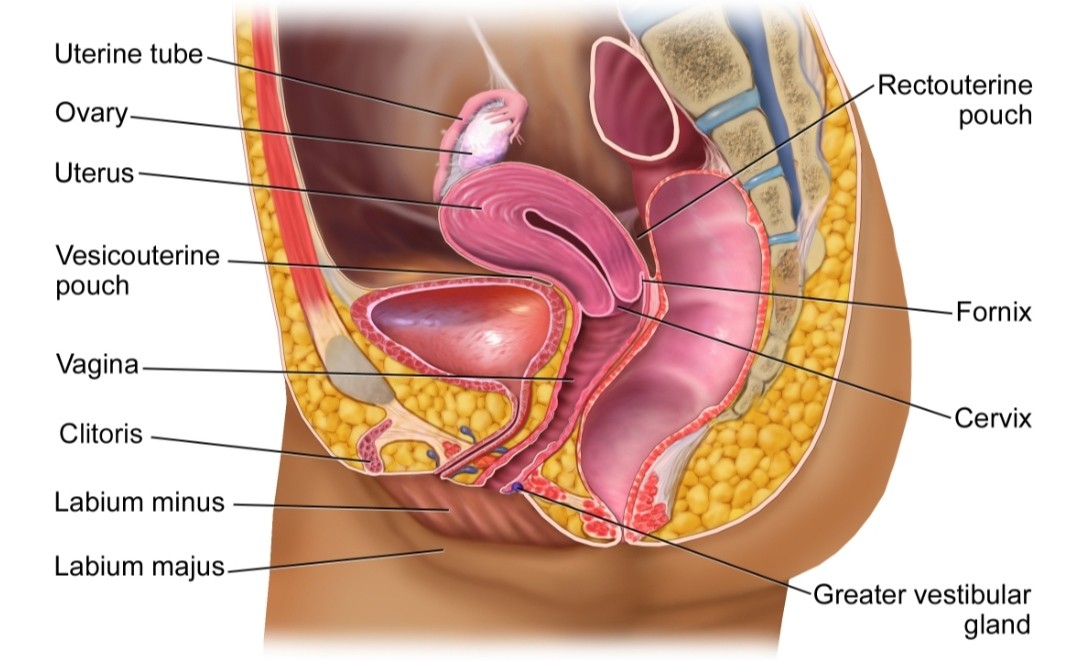
The main structures of the female reproductive system are internal to the body and shown in the following figure. They include the paired ovaries, which are small, ovoid structures that produce eggs and secrete estrogen. The two Fallopian tubes start near the ovaries and end at the uterus. Their function is to transport eggs from the ovaries to the uterus. If an egg is fertilized, it usually occurs while it is travelling through a Fallopian tube. The uterus is a pear-shaped muscular organ that functions to carry a fetus until birth. It can expand greatly to accommodate a growing fetus, and its muscular walls can contract forcefully during labour to push the baby out of the uterus and into the vagina. The vagina is a tubular tract connecting the uterus to the outside of the body. The vagina is where sperm are usually deposited during sexual intercourse and ejaculation. The vagina is also called the birth canal because a baby travels through the vagina to leave the body during birth.
The external structures of the female reproductive system are referred to collectively as the vulva. They include the clitoris, which is homologous to the male penis. They also include two pairs of labia (singular, labium), which surround and protect the openings of the urethra and vagina.
The Sperm Cell
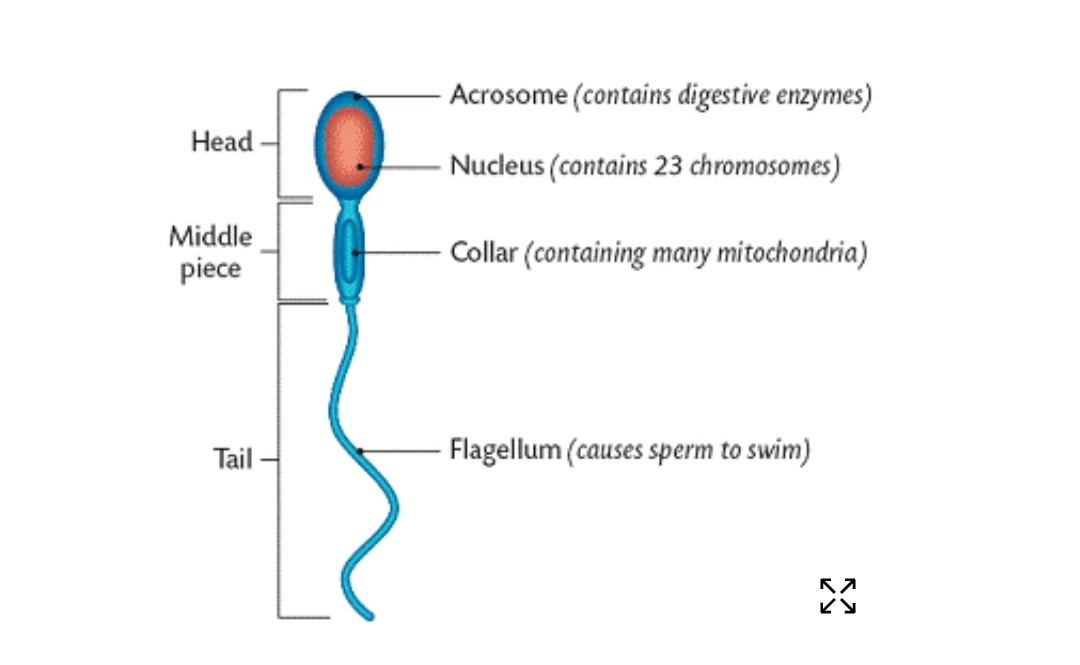
The sperm cells are the haploid gametes which are produced in the male. There are different parts of the sperm cell.
- Acrosome: This structure contains enzymes used for penetrating the female egg.
- Nucleus: There is the genetic material which is a haploid genome because it contains only one copy of each chromosome.
- Middle piece: The middle piece has a central filamentous core with many mitochondria spiralled around it which is used for ATP production for the journey through the female cervix, uterus and uterine tube.
- Tail: There is a long tail which is used for swimming and reaching near the egg.
The Ovum (egg)
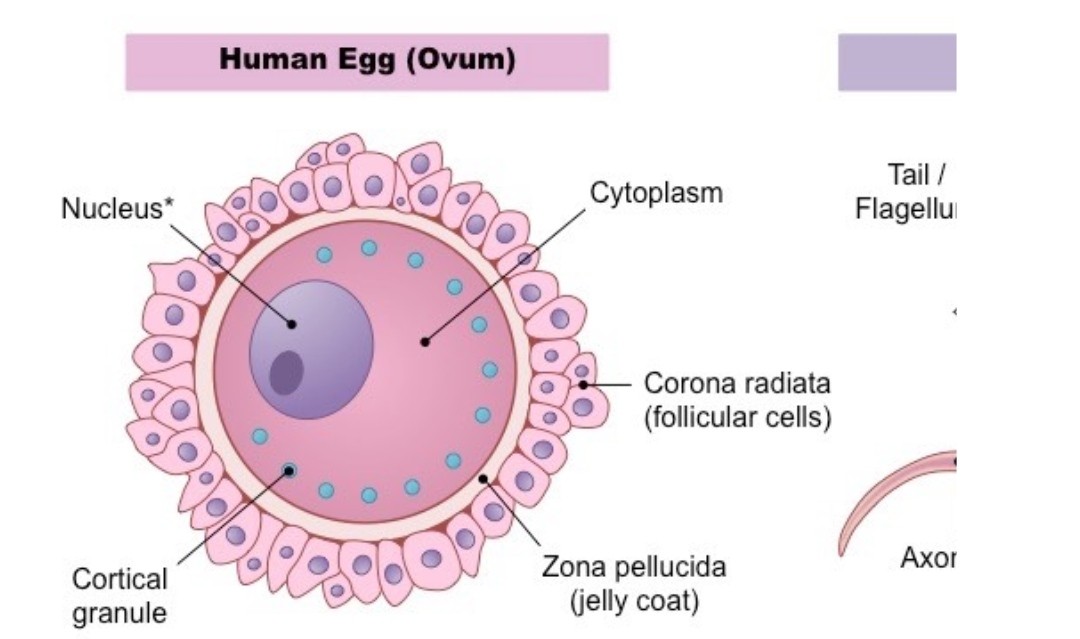
- A typical egg cell is surrounded by two distinct layers – the zone pellucid (jelly coat) and corona radiata
- The zona pellucida is a glycoprotein matrix which acts as a barrier to sperm entry
- The corona radiata is an external layer of follicular cells which provide support and nourishment to the egg cell
- Within the egg cell are numerous cortical granules, which release their contents upon fertilisation to prevent polyspermy
- Although diagrams of egg cells commonly include a haploid nucleus, no nucleus will form within the egg until after fertilisation has occurred (the egg cell is arrested in metaphase II until it becomes fertilised by a sperm).