
NITROGEN CYCLE - DECOMPOSITION IN NATURE
BIOLOGY SSS 2 SECOND TERM
WEEK TWO
NITROGEN CYCLE - DECOMPOSITION IN NATURE
PERFORMANCE OBJECTIVE
Students should be able to;
- Describe with a diagram the role of Nitrogen
- State the importance of Nitrogen
- Describe the process of the Nitrogen cycle
- State that energy can be obtained by decomposing organic substances
- Identify one of the gases produced during the decay process
CONTENT
The air we breathe contains 78% nitrogen, 21% oxygen and remaining are other trace gases. The nitrogen component of air is inert. So this means plants and animals cannot use it directly. To be able to use nitrogen, plants convert atmospheric nitrogen to nitrates, nitrites and ammonia compounds by a process called the nitrogen cycle. Animals derive their nitrogen requirements from plants.
What are the steps involved in the nitrogen cycle?
Nitrogen cycle consists of four main steps namely:
- Nitrogen Fixation
- Ammonification/ Decay
- Nitrification
- De-nitrification
It is important to note that microorganisms play an important role in each of these steps.
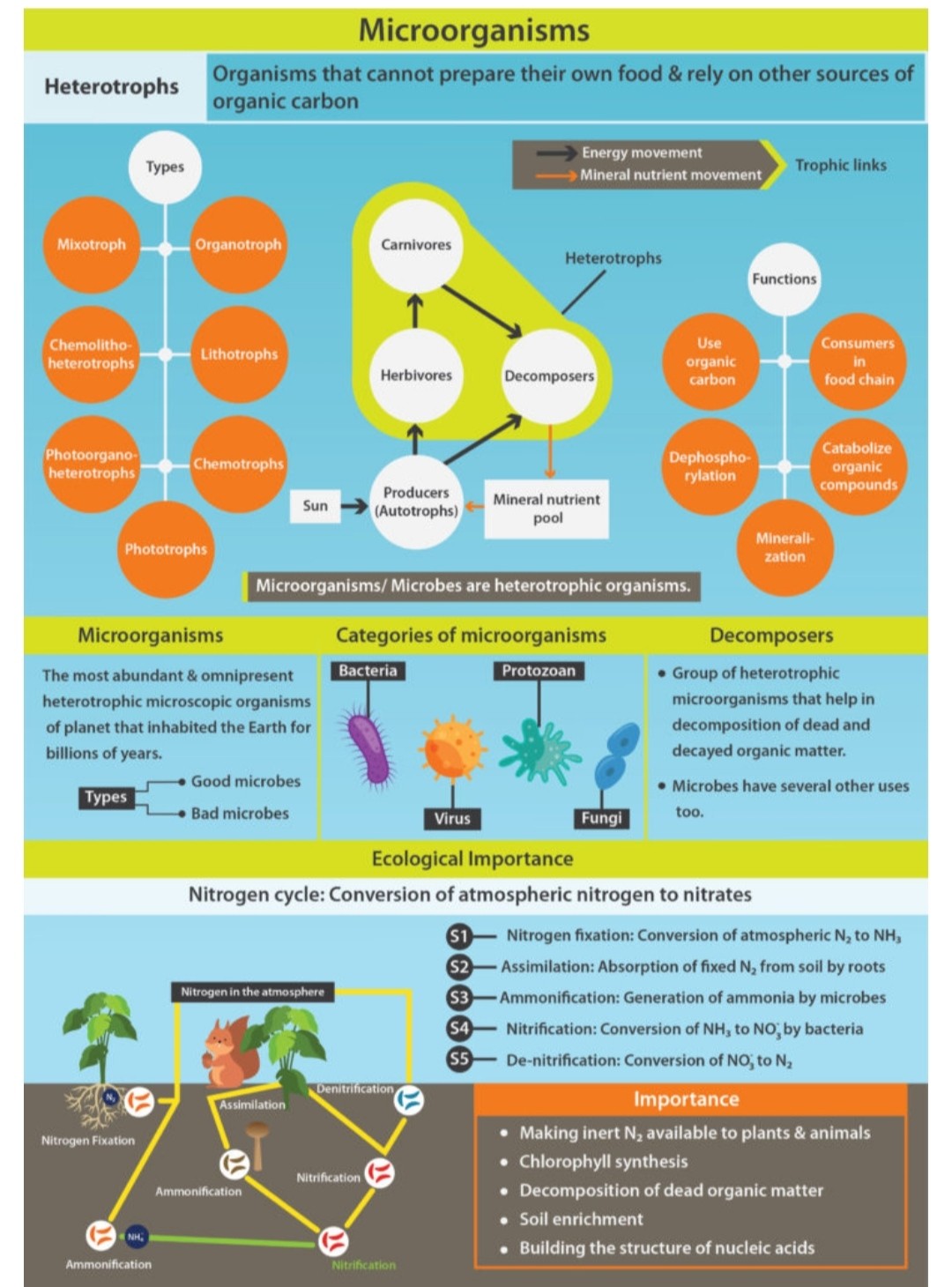
What is the mechanism of each of these steps?
- Nitrogen Fixation
This is the first step of the nitrogen cycle. This step is characterized by the conversion of atmospheric N2 into ammonia (NH3). Bacteria like Azotobacter and Rhizobium have a major role in this process. They are harboured in the roots of the leguminous plants and help convert inert nitrogen to ammonia. Nitrogen fixation can occur in any of the following ways: atmospheric fixation (involves lightening), industrial fixation(manufacturing ammonia under high temperature and pressure condition).
The air we breathe contains 78% nitrogen, 21% oxygen and remaining are other trace gases. The nitrogen component of air is inert. So this means plants and animals cannot use it directly. To be able to use nitrogen, plants convert atmospheric nitrogen to nitrates, nitrites and ammonia compounds by a process called the nitrogen cycle. Animals derive their nitrogen requirements from plants.
- Assimilation
Once the nitrogen has been fixed in the soil, plants can absorb nitrogen through their roots. This process of absorption is known as assimilation.
- Ammonification
This is another process by which ammonia can be generated. Organic remains of plants and animals are broken down in the soil by some bacteria to release ammonia into the soil. These dead and waste matter is used by these microorganisms as food and they release ammonia into the soil.
- Nitrification
This occurs in two-steps. The first step is in which NH3/NH$+ is converted to NO3- (nitrates). The bacteria Nitrosomonas and Nitrococcus present in the soil convert NH3 to NO2-, and another bacterium, Nitrobacter converts NO2- to NO3-. These bacteria gain energy through these conversions.
- Denitrification
Is the reverse of nitrification that occurs in the deep layers of soil where the bacteria convert NO3- is converted into N2 and other gaseous compounds like NO2. This occurs because in deep layers of soil, oxygen is not available and the soil bacteria use these nitrogen compounds instead of oxygen.
What is the importance of the nitrogen cycle?
As we all know by now, the nitrogen cycle helps bring in the inert nitrogen from the air into the biochemical process in plants and then to animals.
Plants need nitrogen to synthesize chlorophyll and so the nitrogen cycle is essential for them. During the process of ammonification, the bacteria help degrade decomposing animal and plant matter. This helps in naturally cleaning up the environment.
Due to the nitrogen cycle, nitrates and nitrites are released into the soil which helps in enriching the soil with nutrients needed for cultivation. As plants use nitrogen for their biochemical processes, animals obtain the nitrogen and nitrogen compounds from plants. Nitrogen is needed as is an integral part of the cell composition. It is due to the nitrogen cycle that animals are also able to utilize the nitrogen present in the air.
A decomposer is an organism that decomposes or breaks down, organic material such as the remains of dead organisms. Decomposers include bacteria and fungi. These organisms carry out the process of decomposition, which all living organisms undergo after death. Decomposition is an important process because it allows organic material to be recycled in an ecosystem.
Function of Decomposers
Decomposers play an important role in every ecosystem. Without decomposers, dead organisms would not be broken down and recycled into other living matter. The reason decomposers decompose, however, is simply because they need to survive. Decomposers are heterotrophic, which means they get their energy from ingesting organic material. A dead organism provides nutrients for decomposers like bacteria and fungi to use to grow and reproduce, propagating their species. The side effect of this basic need to survive is that organic material and nutrients are cycled throughout the ecosystem as other organisms consume the bacteria and fungi.