
NUTRIENT CYCLING - CARBON, OXYGEN AND WATER CYCLES
BIOLOGY SSS 2 SECOND TERM
WEEK ONE
NUTRIENT CYCLING - CARBON, OXYGEN AND WATER CYCLES
PERFORMANCE OBJECTIVE
Students should be able to;
- Describe how carbon cycle circulate in nature and draw the carbon cycles in details
- State why the carbon cycle is necessary for life
- Recognize the delicate balance in carbon and oxygen
- Describe the part played by animals in the water cycle
- Draw the diagram of the water cycle.
CONTENT
Carbon cycle
Carbon cycle, in biology, circulation of carbon in various forms through nature. Carbon is a constituent of all organic compounds, many of which are essential to life on Earth. The source of the carbon found in living matter is carbon dioxide (CO2) in the air or dissolved in water. Algae and terrestrial green plants (producers) are the chief agents of carbon dioxide fixation through the process of photosynthesis, through which carbon dioxide and water are converted into simple carbohydrates. These compounds are used by the producers to carry on metabolism, the excess being stored as fats and polysaccharides. The stored products are then eaten by consumer organisms, from protozoans to man, which convert them into other forms. CO2 is added directly to the atmosphere by animals and some other organisms as a by-product of respiration. The carbon present in animal wastes and the bodies of all organisms is released as CO2 by decay, or decomposer, organisms (chiefly bacteria and fungi) in a series of microbial transformations.
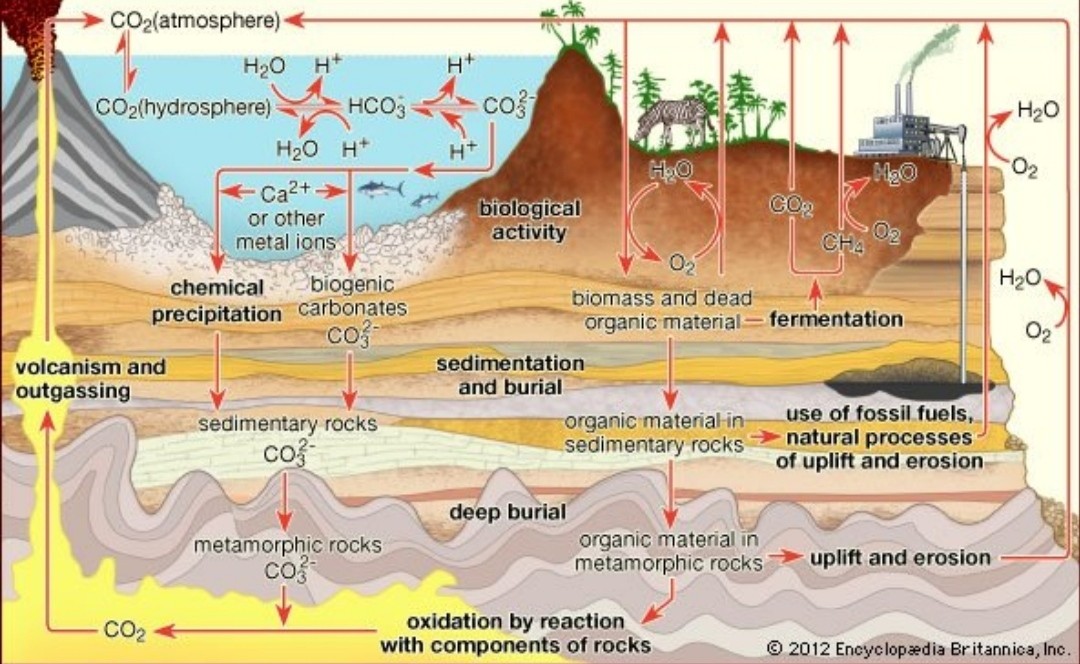
Part of the organic carbon—the remains of organisms—has accumulated in Earth’s crust as fossil fuels (e.g., coal, gas, and petroleum), limestone, and coral. The carbon of fossil fuels, removed from the cycle in prehistoric time, is now being released in vast amounts as CO2 through industrial and agricultural processes, much of it quickly passing into the oceans and there being “fixed” as carbonates. If oxygen is scarce (as in sewage, marshes, and swamps), some carbon is released as methane gas.
The carbon cycle describes the way the element carbon moves between the Earth's biosphere, hydrosphere, atmosphere, and geosphere. It is important for a few reasons:
- Carbon is an essential element for all life, so understanding how it moves helps us to understand biological processes and factors that influence them. One form carbon takes is the greenhouse gas carbon dioxide, CO2. Increased levels of carbon dioxide insulate the Earth, causing temperatures to rise. Understanding how carbon dioxide is absorbed and released helps us understand the climate and predict global warming.
- Carbon is not in balance, so it's important to learn where it is being stored and released. The rate at which carbon is deposited into living organisms is not the same as the rate it is returned to the Earth. There is about 100x more carbon in living matter than in the Earth. Burning fossil fuels releases massive amounts of carbon into the atmosphere and to the Earth.
The carbon cycle is tied to the availability of other elements and compounds. For example, the carbon cycle is tied to the availability of oxygen in the atmosphere. During photosynthesis, plants take carbon dioxide from the air and used it to make glucose (stored carbon), while releasing oxygen.
Oxygen Cycle
Oxygen cycle, circulation of oxygen in various forms through nature. Free in the air and dissolved in water, oxygen is second only to nitrogen in abundance among uncombined elements in the atmosphere. Plants and animals use oxygen to respire and return it to the air and water as carbon dioxide (CO2). CO2 is then taken up by algae and terrestrial green plants and converted into carbohydrates during the process of photosynthesis, oxygen being a by-product. The waters of the world are the main oxygen generators of the biosphere; their algae are estimated to replace about 90 per cent of all oxygen used. Oxygen is involved to some degree in all the other biogeochemical cycles. For example, over time, detritus from living organisms transfer oxygen-containing compounds such as calcium carbonates into the lithosphere.
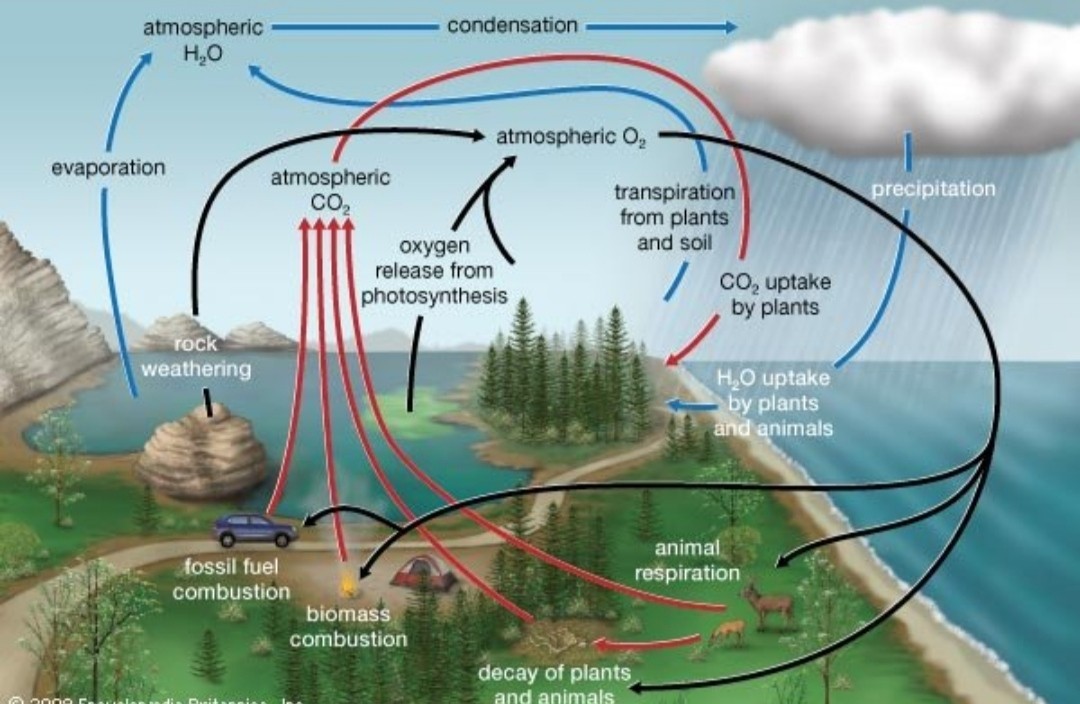
Despite the burning of fossil fuel and the reduction of natural vegetation (on land and in the sea), the level of atmospheric oxygen appears to be relatively stable because of the increase in plant productivity resulting from agricultural advances worldwide.
The process by which oxygen released into the atmosphere by photosynthetic organisms.
Importance
- Oxygen is an element that is very important to living organisms.
- The main source of atmospheric free oxygen is photosynthesis
- It is created and used in different ways.
- The quantity of oxygen is 20.95% in the atmosphere which is maintained by the oxygen cycle.
- The oxygen cycle is often interconnected with the carbon cycle because carbon and oxygen are often combined in a molecule.
0xygen cycles has four main reservoir
- The Atmosphere
- The Hydrosphere
- The Lithosphere
- The Biosphere
How 0xygen is produced:-
- Plants create the majority of the oxygen we breathe through a process called photosynthesis.
- In this process, plants use carbon dioxide, sunlight & water to create energy.
- In the process, they also create oxygen which they release into the air.
Importance of 0xygen:-
- It helps move oxygen through the three main regions of the Earth.
- To break down sugar to produce ATP or adenosine triphosphate.
- To help someone who cannot breathe by providing them with oxygen.
Water Cycle
Precipitation is a vital component of how water moves through the Earth’s water cycle, connecting the ocean, land, and atmosphere. Knowing where it rains, how much it rains and the character of the falling rain, snow or hail allows scientists to better understand precipitation’s impact on streams, rivers, surface runoff and groundwater. Frequent and detailed measurements help scientists make models of and determine changes in Earth’s water cycle.
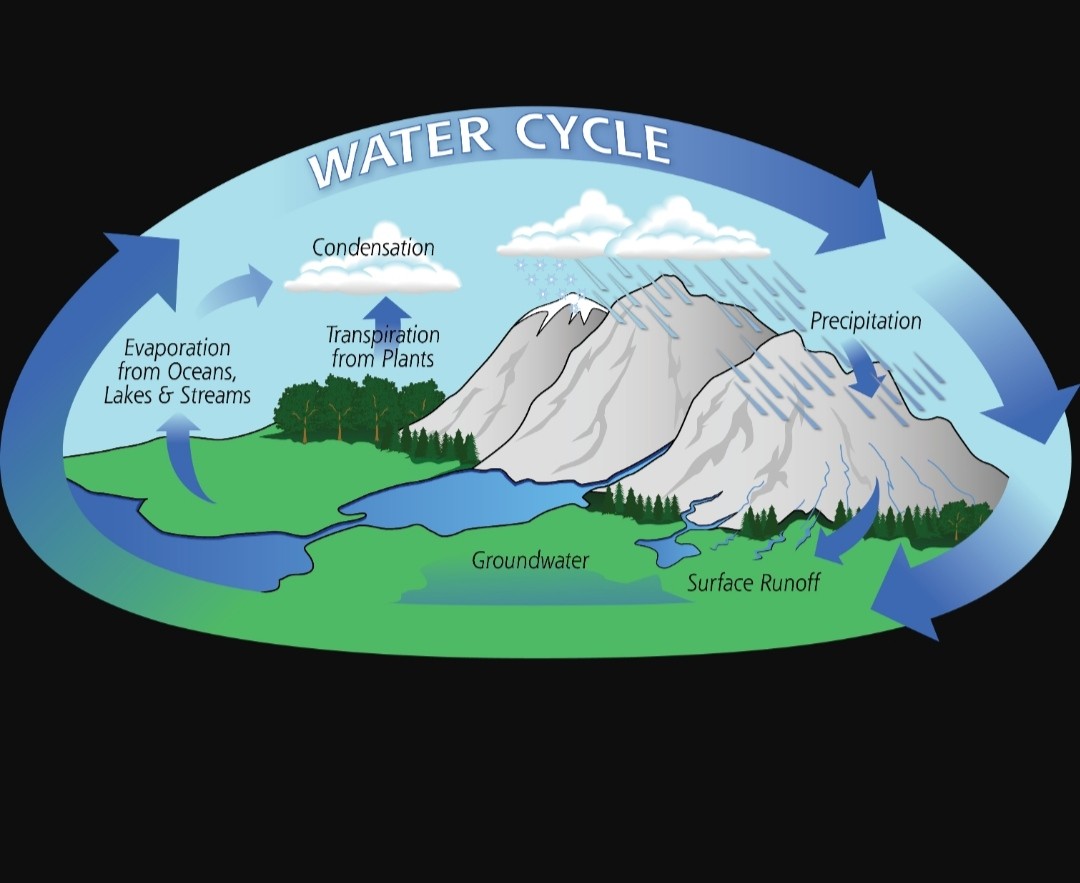
The water cycle which can also be called the hydrological cycle describes how water evaporates from the surface of the earth, rises into the atmosphere, cools and condenses into rain or snow in clouds, and falls again to the surface as precipitation. The water falling on land collects in rivers and lakes, soil, and porous layers of rock, and much of it flows back into the oceans, where it will once more evaporate. The cycling of water in and out of the atmosphere is a significant aspect of the weather patterns on Earth.
Importance of the Water Cycle
The hydrologic cycle is important because it is how water reaches plants, animals and us! Besides providing people, animals and plants with water, it also moves things like nutrients, pathogens and sediment in and out of aquatic ecosystems.