
Air
CHEMISTRY SSS2 second Term
WEEK 1
Air
Performance objectives
Students should be able to:
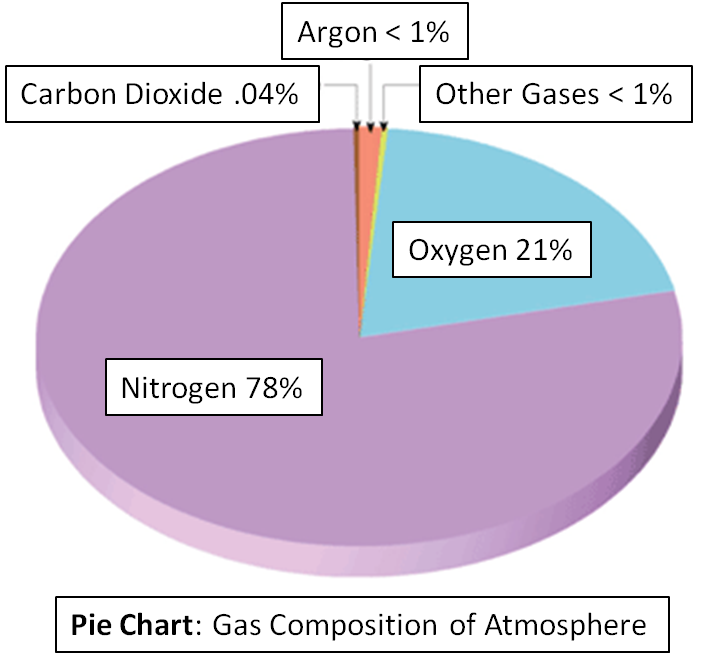
- List the constituents of air and state their percentage composition
- State the properties of air
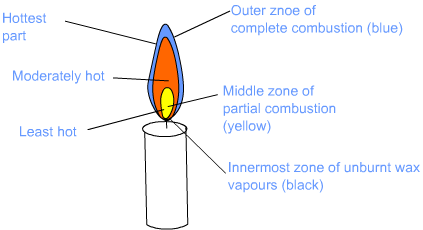
- Draw and label two zones of flame.
Content
Introduction to the component of air
We all know that air surrounds us everywhere on this planet. One cannot imagine the existence of life without air. Ever wondered what is air made up of? Is it a mixture or a pure substance? In ancient times, the air was thought to be a pure substance but was later found to be a mixture of many gases. The composition of air is not constant and changes from place to place. For example: in polluted areas, since emissions of carbon dioxide are very high air over there contains the higher percentage of carbon dioxide. The main components of air are explained below:
Water vapor
We know that water present in oceans and rivers evaporates during summer and escapes into the air. Thus water vapor is one of the components of the air. It occupies very less percentage of earth’s atmosphere.
Oxygen
Have you ever tried to burn a candle in absence of air? If you would try you would notice that it doesn’t burn in absence of air. Air contains some matter which supports combustion. This substance is oxygen. Oxygen is one of the major components of air around us. Air comprises almost 21% oxygen.
Nitrogen
When you blow over a burning candle you notice that it extinguishes. This means air contains incombustible gases (gases which don’t support combustion) too. This is majorly due to the presence of nitrogen. Nitrogen occupies nearly 78% of earth’s atmosphere and is the most abundant gas on our planet.
Carbon dioxide
Carbon dioxide is mainly produced due to respiration by plants and animals or burning of fuel. It occupies 0.038% of the earth’s atmosphere. Its occupancy keeps on changing from one place to another in our atmosphere.
Smoke and dust particles
Smoke is present in our atmosphere due to the burning of fuels. Its occupancy varies from place to place. It is a mixture of gases and is often harmful. Apart from these, dust particles are also present in our atmosphere which we observe when we see a ray of light in a dark room. Smoke and dust particles occupy less than 1% of earth’s atmosphere.
Properties of Air
As mentioned earlier, gases are matter. There are certain properties of gases like any other matter. Some common properties are as follows:
Colorless and odorless
Air generally has no color or odor. It is an invisible matter that can only be felt. All living things breathe air for their survival. Moving air is called wind.
Occupy space
It is a mixture of different gases. Hence, like every other matter, they also occupy space. On blowing, a balloon expands because the air being blown into it fills up the empty space.
Air exerts pressure
It has weight, and the pressure exerted by the weight of air is known as air pressure. Due to gravity, this mixture of gases near the surface is denser than at high altitudes. This is why the gaseous atmosphere in the mountains is thinner than that at the surface.
Expansion
Another property is its expanding property. On heating, it expands and occupies more space. The more it expands, the thinner it becomes. Hence, the pressure of the warm wind is lower than that of cold wind.
Flame
Flame is the visible and gaseous part of fire. When vapor of a substance undergoes combustion, it results in flame. Only those substances which vaporize on burning produce flame. If a substance does not get vaporized, it does not produce flame.
Zones of Flame
There are three zones in flame, viz. outer zone, middle zone and inner zone.
Outer Zone: This zone is blue in color. It is the hottest part of the flame, because complete combustion takes place in this zone.
Middle Zone: This zone is yellow and orange in color. This zone is moderately hot because partial combustion takes place in this zone.
Inner Zone: This zone is dark in color. This is the coolest part of the flame because no combustion takes place in this zone.
Characteristics of a Good Fuel:
- It is readily available.
- It is cheap.
- It burns easily in air.
- It burns at a moderate rate.
- It produces a large amount of heat.
- It does not leave behind any undesirable substance.
There is probably no fuel which can be considered as ideal fuel.
Structure of flame