
Free hand sketching
BASIC SCIENCE JSS1 third term
Sub-Theme: Safety, Material and Processing
Theme Understanding Basic Science and Technology
WEEK 1
Freehand sketching
Performance objectives
Students should be able to:
- Define freehand sketching
- Make neat freehand sketches of lines, curves, and irregular shapes
Content
Freehand sketching
This is a quick and convenient way of describing the shape of an object. Freehand sketching is the quickest method to describe the shape of an object. It can be communicated to others without the use of any drawing instruments except a pen or pencil.
It is a drawing made without the use of drawing instruments, for instance, a simple sketch of a building or structure will give an insight to what the designer intends to build for his or her client. The ability to make freehand sketches is a valuable asset acquired through regular practice which helps to develop one’s ability to observe details in an object and later describe it on paper.
Materials required for freehand sketching
The following are freehand sketching materials
- Drawing sheet or paper
- Soft eraser
- Drawing pencils
- Razorblade or sharpener
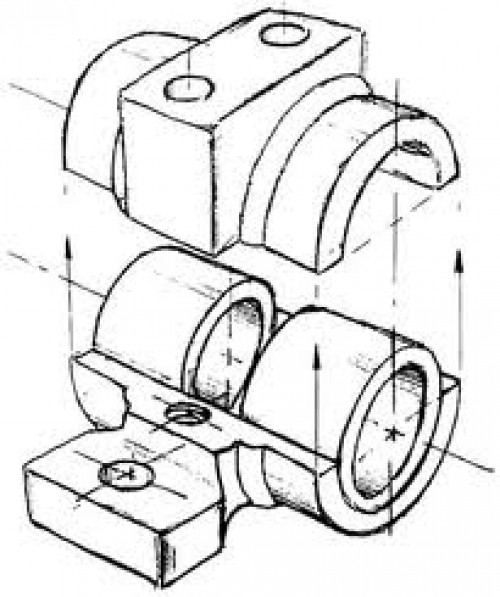
Freehand sketching
Sketching techniques
Sketching a straight line
A straight line is a short distance between two points.
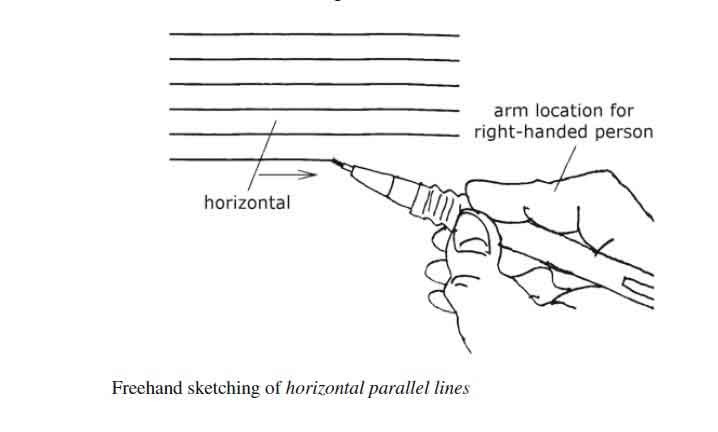
A straight line can be sketched using a dash or dot far enough to the right-hand side of the drawing sheet. Start to draw a line from the left hand to join the dash or dot with your eyes fixed on the point.
Sketching curve
This is done by plotting some points not too far from each other at different level later join all the plots point together as shown below.
Sketching a circle
To draw a circle, the easiest way is to draw lines which are equal in diameter to the circle in different directions. Each line must be drawn as faint and straight as possible, each crossing one another at a central point.
Then join the point by little curve from the tip of each line. Try to draw another circle by means of joining two large curves having half the size as radius and full size in diameter.
Sketching a square box
This can be sketched in an isomeric or oblique view. An isomeric view has an inclined vertical height and baseline at 300 to the horizontal. An oblique view has the height vertical and one baseline inclined at 450 to the horizontal while the second baseline is horizontal. Once it s decided which view to represent, the block is drawn by using a series of straight lines both vertical and horizontal, applying the techniques discussed earlier.
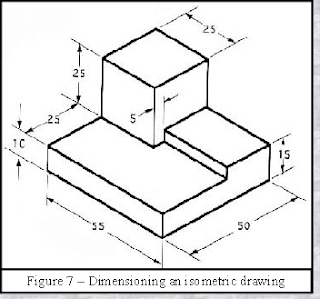
Isomeric square block
Sketching an irregular edge
Figures with an irregular edge are first drawn by sketching a rectangular or square block which can completely contain the object. The shape is then carefully shaped by using dotted lines to show the desired shape with appropriate curves.