
Classes of Farm Animals II
Agricultural Science JSS1 Second Term
WEEK 4
Classes of Farm Animals II
Performance Objectives
1. Classify farm animals based on body morphology
2. Classify farm animals based on the type of stomach
Content
Classification Based on Body Morphology
Morphology refers to the features, form or shape of an animal therefore, farm animals are grouped into three based on body morphology and they are as follows:
1. Mammals: Mammals are warm-blooded animals which give birth to their young ones alive. The females possess mammary glands that they use to feed their young ones with milk. Some of them usually have hair all over their bodies and they possess backbones too. Examples of mammals include cattle, sheep, goat, horses, pig, dog, cat etc.
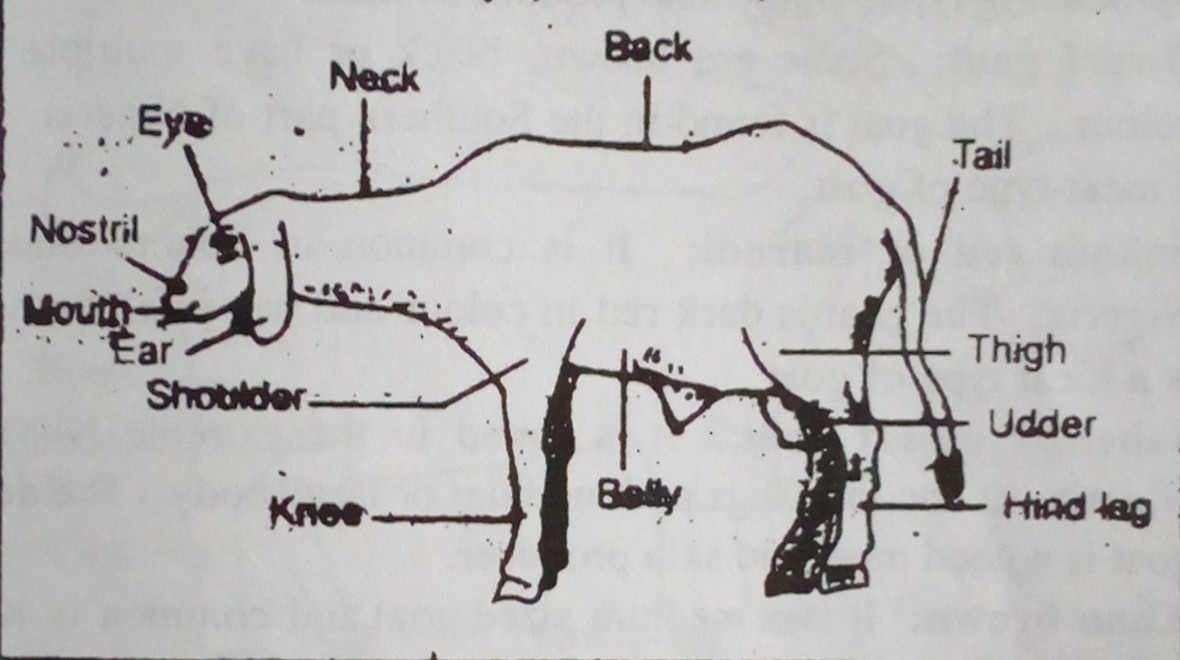
A well-labelled diagram of a female sheep
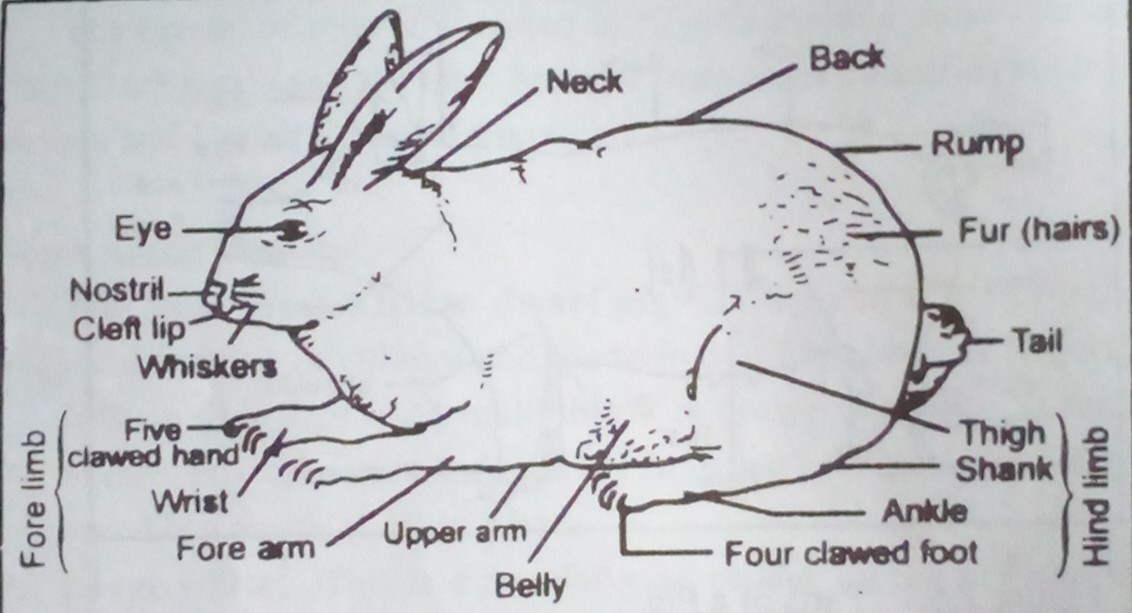
A well-labelled diagram of a rabbit
2. Birds: Birds are also warm-blooded animals that are covered externally with feathers. They possess wings with which they fly. Unlike mammals, birds lay eggs and they do not feed their young ones with milk instead they feed them with most grains. Examples of birds guinea fowl, chicken( layers and broilers), turkey, duck, pigeon, geese etc. All these birds are domesticated by man.
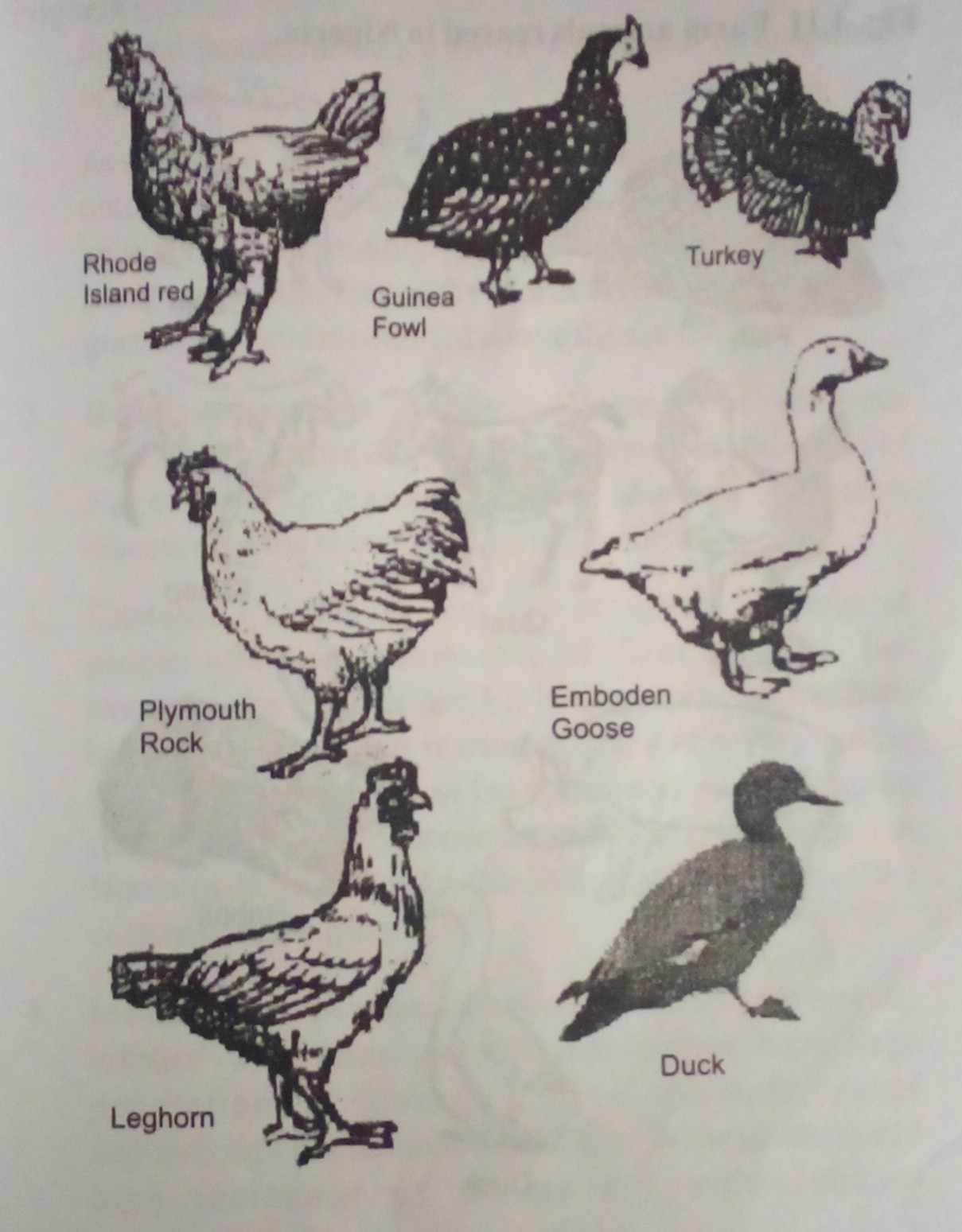
A picture showing different types of birds
3. Fishes: Unlike mammals and birds, fishes are cold-blooded animals that live in water. Morphologically, fish may be bony or cartilaginous. Some fishes are covered with scales while some are not. The fish uses fins for movement in water and they give birth by laying eggs. These eggs are hatched into their young ones. Some fishes feed on their fellow fish while some feed on plants known as plankton. Examples of fish include catfish, tilapia, shark, crab, ray, mudfish, mackerel etc.
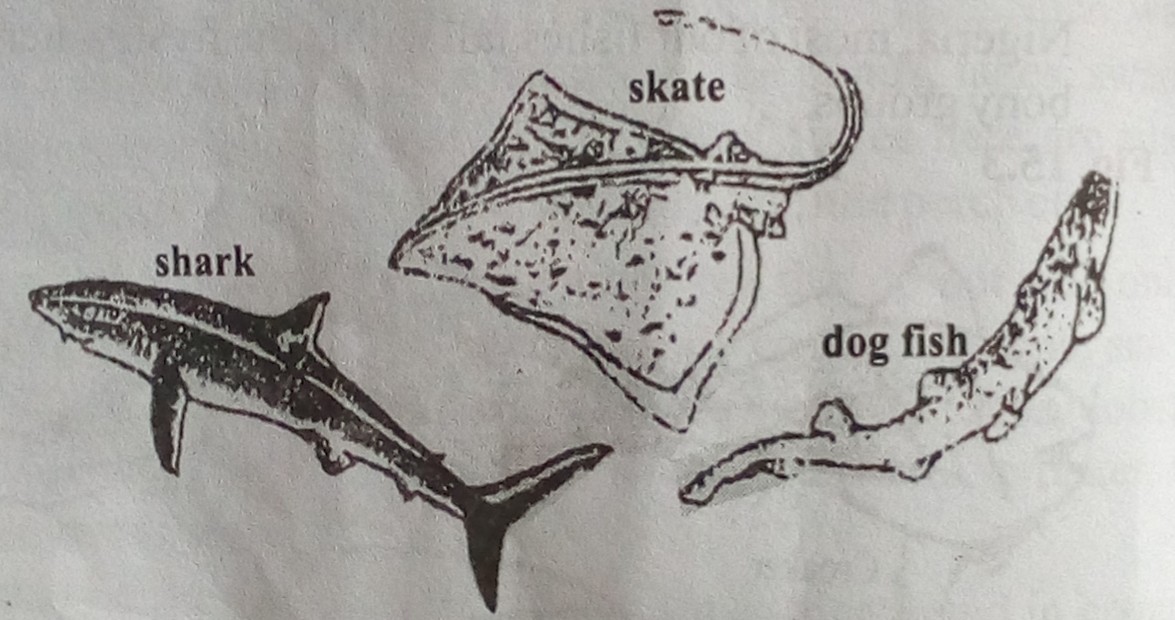
A picture showing different types of fishes
Classification Based on Type of Stomach
Farm animals are grouped into two based on their stomach type and they are as follows:
1. Ruminant animals: These are farm animals that have four-compartment stomach or complex stomach. The four-compartment stomach are RUMEN, RETICULUM, OMASUM and ABOMASUM or TRUE STOMACH. Ruminant animals feed on mainly on grasses and they chew the cud. Examples of ruminant animals are goat, sheep, donkey and camel.
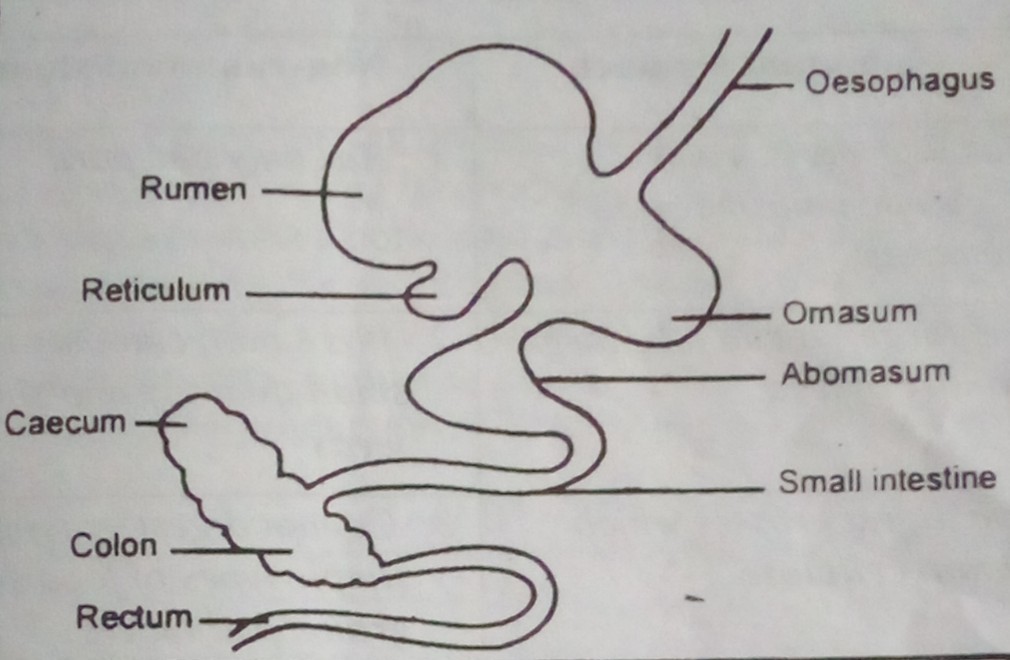
A diagram showing the stomach of a ruminant animal
2. Non-ruminant animals: These are farm animals that have a simple stomach like a man and do not chew the cud. The food eaten by non-ruminant animals is chewed completely in the mouth with the help of the teeth before it is swallowed into the stomach. Non-ruminant animals feed mainly on grains, roots and tubers. Examples are rabbit, pig, poultry, horses snail and guinea pig.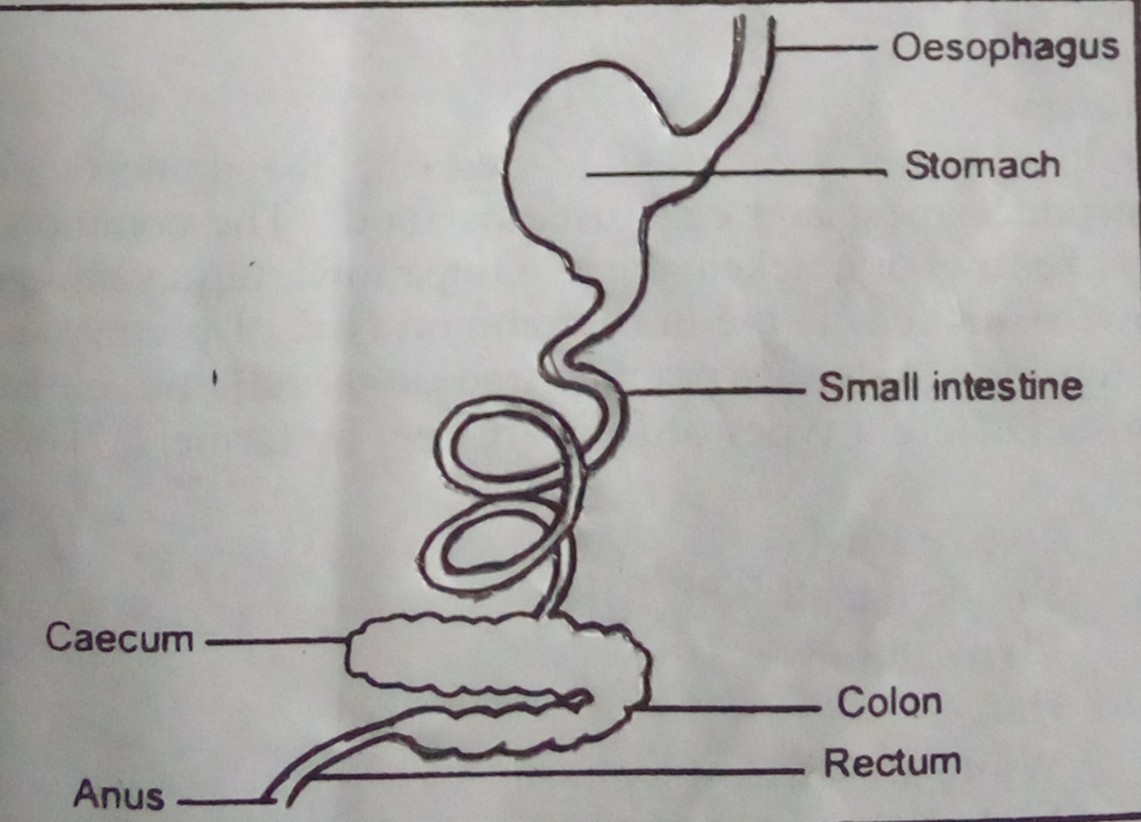
A diagram showing the stomach of a non-ruminant animal
Differences Between Ruminant and Non-ruminant Animals
|
Ruminant Animals |
Non-ruminant Animals |
|
They have four compartment stomach or complex stomach. |
They have only one stomach. |
|
They feed on grasses. |
They feed mainly on grains, roots and tubers. |
|
The capacity of the stomach of the ruminant animal is large. |
The capacity of the stomach of a non-ruminant animal is small. |
|
They can regurgitate (Vomit) food |
They cannot regurgitate (Vomit) food. |