
Deductive Proofs (II)
Mathematics SSS 1 Third Term
WEEK 2
Deductive Proofs (II)
Performance Objectives
Students should be able to;
- Participate in teachers demonstrations by contributing in making some deductions.
- Write down essential points agreed upon on angles of polygon and congruent triangles
- Take special note to the format
- Solve task given.
Congruent Triangles
Content
Two triangles are said to be congruent if they are equal in all respects. Such triangles have similar shapes and identical dimensions.
For two triangles to be congruent, the following conditions must be met:
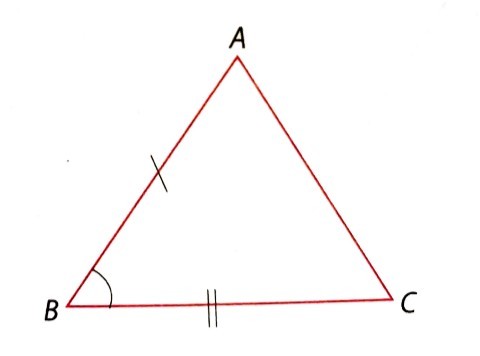
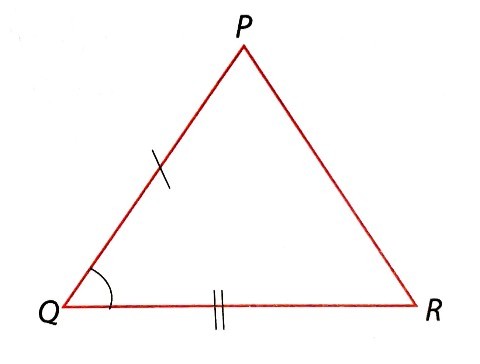
1. Two sides and the included angle of one of the triangles are equal to the corresponding two sides and the included angle of the other, it is denoted by SAS.
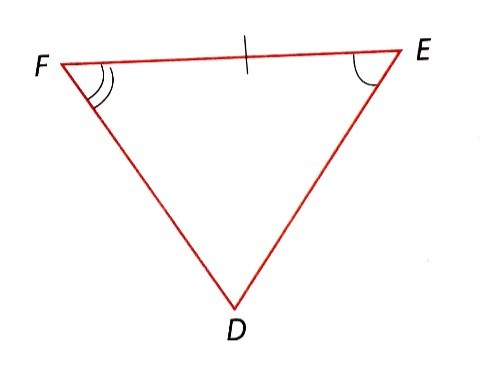
2. Two angles and a side of one of the triangles are equal to two angles and the corresponding side of the other. It is denoted by ASA or AAS.
3. The three sides of one triangle are equal to the three corresponding sides of the other triangle. It is denoted by SSS.
4. Two right-angled triangles are said to be congruent if the hypotenuse and one other side of the triangle are equal to the hypotenuse and another side of the other triangle. It is denoted by RHS.
Two sides and included angle
If two different triangles ABC and PQR are drawn, such that /AB/ = IPQI, IBCI=/QR/ and ABC = PQR, then the triangles ABC and PQR are congruent (SAS). That is triangle ABC = triangle PQR (SAS).
a)
b)
Two angles and a side
If two triangles DEF and STU are drawn such that DËF = SŤU, EFD = TÜS and /EF/ = ITUI, then triangles DEF and STU are congruent. That is triangle DEF = STU (ASA).
a)
b) 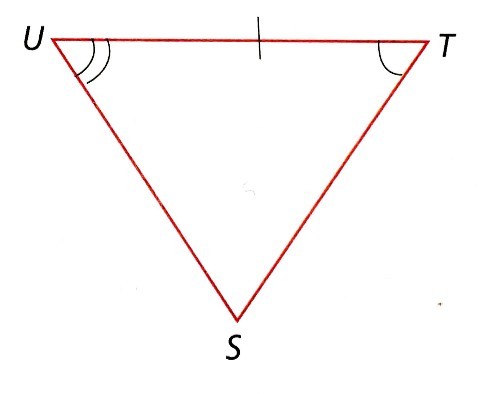
Three sides
If two different triangles GHI and VWX are drawn, such that IGHl = |VWI, IGIl = |VXI and /HI/ = IWXI, then triangles GHI and VWX are congruent. That is GHI = VWX (SSS).
a) 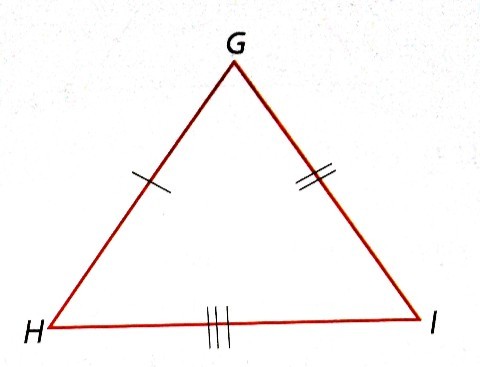
b)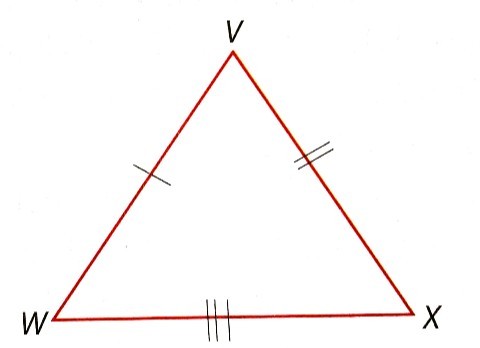
Right angle, hypotenuse and side
If two triangles LMN and XYZ are drawn such that LMN = XYZ = 90°, /LN/ = /XZ/ and /MN/ = IYZI, then triangles LMN and XYZ are congruent. That is triangle LMN = XYZ (RHS).
a)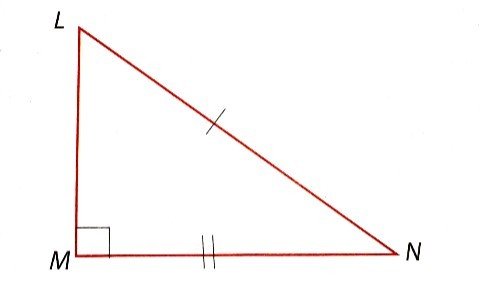
b)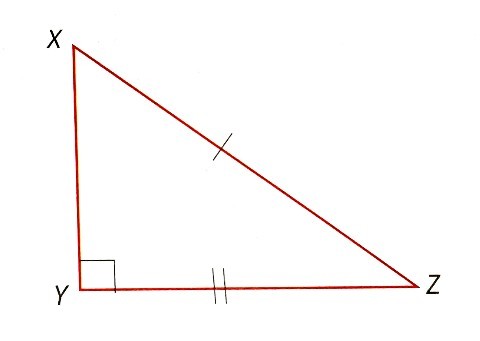
Ambiguous case
If the given angles are not included, the two triangles may or may not be congruent. This is called an ambiguous case.
Naming congruent triangles
This is a way of giving letters in the correct order so that it is easy to identify the corresponding sides and angles in each triangle.
Example 1
State the triangles which are congruent and state the conditions for congruency.
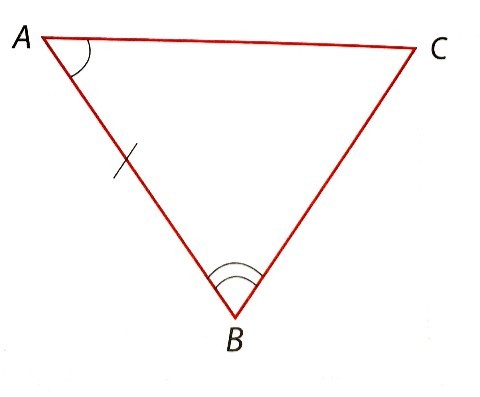
a)
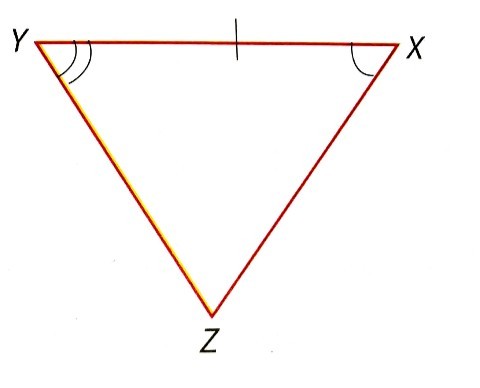
b)
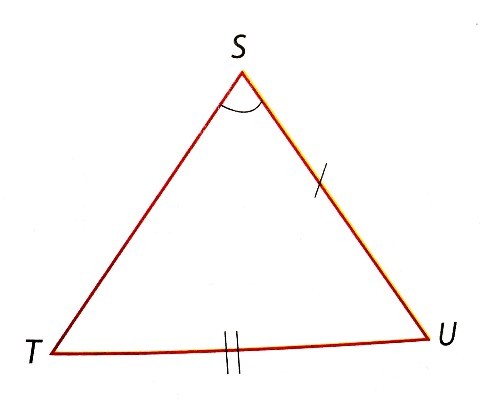
c)
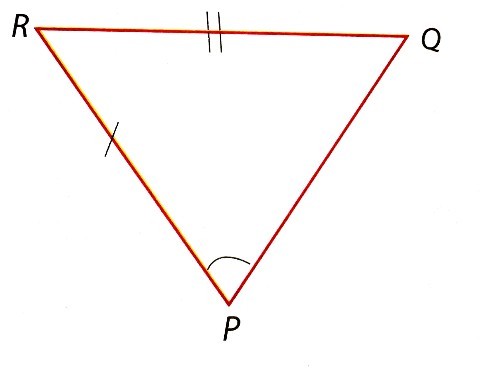
d)
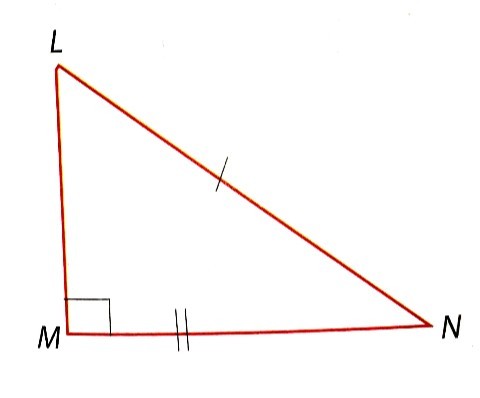
e)
f)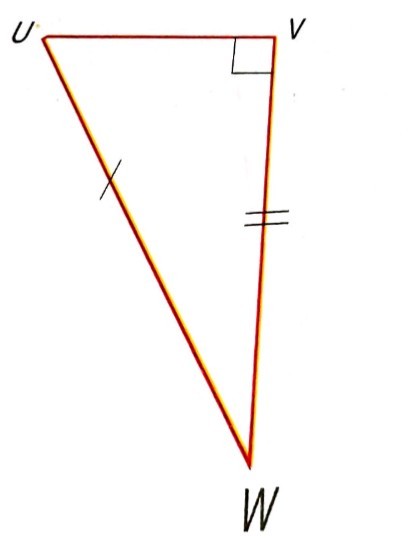
Solution
The two triangles a) and b) are congruent because BÃC = YŽX, ABC = XYZ and /AB/ = /XY/.
:. Triangle ABC = XYZ.
The two triangles c) and d) are not necessarily congruent because the given angles are not included angles, i.e. RPQ and RPQ are not between the given sides.
The two triangles e) and f) are congruent because:
KMN = UVW = 90°, /LN/ = /UW/ and /MN/ = /VW/
: . LMN = AUVW. (RHS).
Example 2
Name the triangle which is congruent to PQR in each of the shapes below. Give letters in the correct order and state the conditions for congruency.
a)
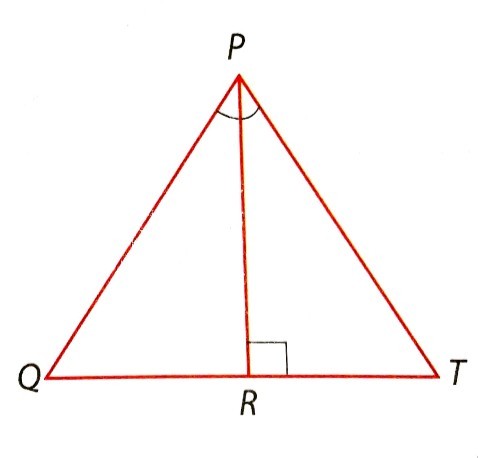
b)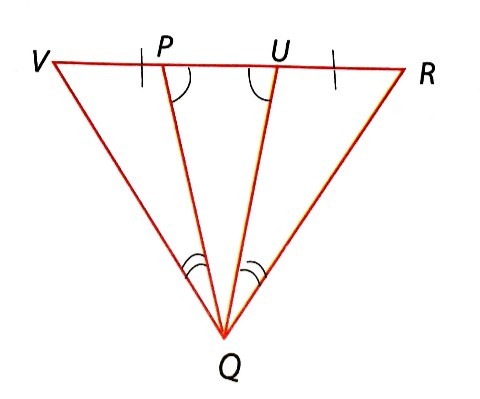
Solution
a) PQR = PTR (RHS).
b) PQR = UQV (ASA).
Isosceles and equilateral triangles
An isosceles triangle is one with two of its sides equal. The third side is called the base. The two equal sides meet at a point called the vertex and the angle at the vertex is known as the vertical angle. An equilateral triangle is a special isosceles triangle whose three (3) sides are equal in length. Each angle in an equilateral triangle is 60°.
The base angles of an isosceles triangle are equal
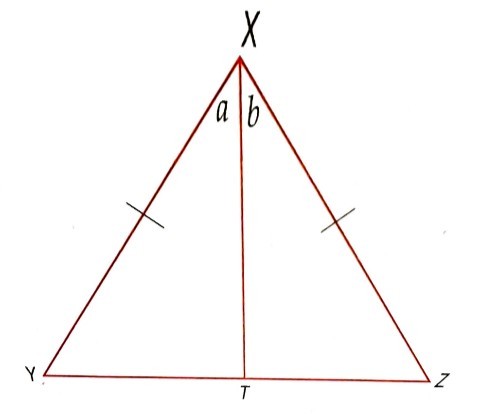
Given: XYZ with |XY = |XZ|
To prove: X = Ż
Construction: Draw the bisector of X to meet YZ at T.
Proof: In As XYT and XZT,
/XY/ = /XZ/ (given)
/XT/ = |XT| (same side)
a = b (angle bisector by construction)
XYT = XZT (SAS)
Y = Z (corresponding angles in XYT and XZT)
From diagram above, |XT| bisects triangle XYZ into two equal parts, such that XYT = XZT.
Therefore, /XT/ is the axis of symmetry of the triangle
The axis of symmetry of any isosceles triangle is the bisector of the vertical angle.
Proof of theorem 6 shows that XYT and XZT are congruent, the following facts also hold:
a) The bisector of the vertical angle bisects the base |YT| = |ZT|.
b) The bisector of the vertical angle meets the base at right angle.
XTY = XŤZ and XTY+ XTZ = 180
XTY = XTZ = 90"
Example 3
The base JK of an isosceles HJK is extended to L. If HJK = 69°, calculate HKL
Solution
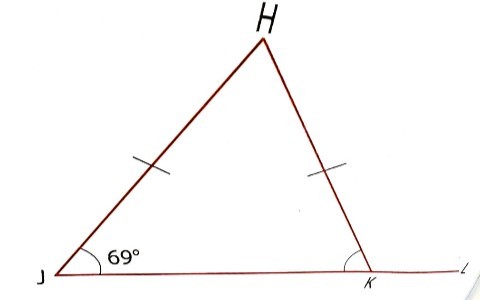
From the diagram above;
J = K (base angles of isosceles triangle)
.: HKJ = 69°
HKJ + HKL = 180° (sum of angles on a straight line)
:. HKL = 180°- HKJ
= 180 - 69°
= 111°
Example 4
In ABC, B = 67° and C = 46°. Prove that /CA/ = /CB/
Solution
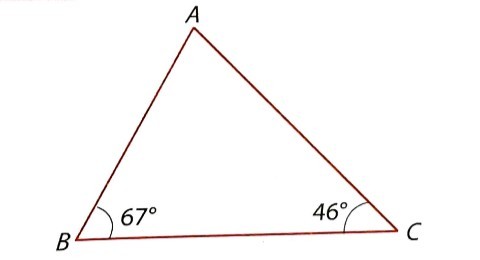
In the diagram above
A + B + C = 180° (sum of angles of a triangle)
A + 67 + 46° = 180°
A + 113 = 180°
Since A and B are equal,
CA = /CB/
1. To prove any of the basic theorems, each of the following layout (steps) need to be considered.
a) Given
b) To prove
c) Construction
d) The proof.
2. The basic theorems include each of the following:
a) The sum of angles of a triangle is 180
b) The exterior angle of any triangle is equal to the sum of opposite interior angles.
c)In a right-angled triangle, the square of the hypotenuse is equal to the sum of the squares of the other two sides.
d) The sum of an interior angle of an n-sided polygon is (2n - 4) right angles.
e) The sum of exterior angles of any polygon is four right angles (360").
3. In an isosceles triangle, one pair of sides are equal, and the base angles are also equal in size.
4. In an equilateral triangle, all the three also equal in length and all the three angles are also equal in size.