
Livestock management.
Agricultural science S.S.S.2 Third term
Week 2
Livestock management.
Performance objective
Students should be able to:
- State the meaning of livestock management.
- State the requirement for good livestock management.
- Explain the importance of theses management practices in livestock.
- Keep farm animals and take care of them at least one ruminant and one non-ruminant.
Content.
Week 2
Meaning of Livestock Management.
Livestock management refers to the activities carried out by a farmer in his effort to raise farm animals from day old to the point of marketing or disposing of the animals. It involves the provision and maintenance of adequate housing, good feeding, sanitation and medicare.
Requirements for Livestock Management.
To successfully manage livestock for maximum benefits, the following factors (requirements) have to be made available:
- Water
- Housing in a good location with the necessary equipment
- Favourable climatic conditions
- Knowledge of the breed of animals to be produced
- Knowledge of pests and diseases the effect the proposed animals
- The technical expertise about the animals to rear
- Nearness to market, good (motorable) roads and storage facilities
- Finance available for the operating farmers.
Systems of Raising Livestock.
There are three systems of raising livestock
- Extensive or free-range system
- Semi-intensive system
- Intensive system
- Extensive or Free Range System:
In this system, animals are left to search for food for themselves. It is the oldest and traditional method of rearing animal practiced generally in Nigeria.
- Semi-intensive System:
In semi-intensive system animals are raised partly indoor and partly outdoor. Some housing and feeding are provided for the animal but they freely look for food and water most of the day. Supplementary feeding is usually provided in the form of concentrates, minerals, vitamins, salt licks within the shelter are provided for them.
- Intensive System:
This is the system whereby animals are restricted or confined within a pen or a cage and all feeding, watering, medication, vaccination and other management are provided.
Cattle Management
Requirements for Cattle Management.
They belong to the group of known as Bovidae. These are ruminants which are reared for meat, milk hide and skin, blood, bone and for work.
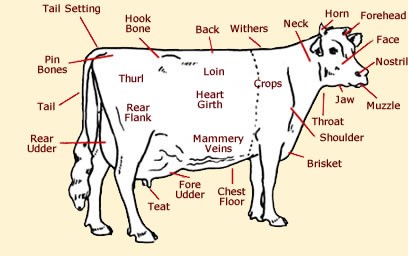
Breeds of Cattle
- Beef Cattle: This type of breed are reared purposely for meat. Examples include;
- N’ dama
- Red Bororo
- Sokoto Gudali
- Keteku Borgu
- Kuri/Lake chad cattle
- Rahaji
- Brown Swiss Biu
- Dairy Cattle: This type is reared purposely for milk. Examples include;
- White Fulani
- Jersey
- Redpoll
- Kerry
- Friesian
- Dexter
- South devon
- Dairy shorthorn
- Aushere
- Guemsey
- Dual-purpose Cattle: They are reared for both meat and milk production. Examples include;
- Muturu
- Biu
- Azawal
- Shuwa
Systems of Cattle Management
- Intensive System:
In this system, cattle herds are kept in confinement most of the time. The system provides conditions for management standards; ease control of parasites, there is protection from extreme weather conditions, predators and thieves. It requires high capital investment in terms of building and feeding. Zero grazing is practised here; the system also saves labour and provides conditions for management standards and easy control of parasites.
The types of housing under this system are:
- Conventional Barn: Herds of cattle are confined in a place and secured by the neck with stanchions or neck chains.
- Loose House: Herds of cattle are loose in an open pasture having shelter where they stay when the weather is hot or cold.
Advantages of Loose House
- Cost of production is reduced
- Protection against adverse weather conditions, disasters and thieves
- Good return on investment
- Proper feeding and proper health care
Disadvantages of Loose House
- Pests and diseases can become rampant on the range
- Vices like fighting and cannibalism are encouraged on the range
- Growth may not be uniform
- Semi-intensive System:
In this system, a form of housing unit is provided as a shelter but the cattle herds are allowed to graze on the range and retire to the house later. It is commonly practised by the government or academic research institutions as experimental or demonstration farms.
- Extensive System:
This system is the same for cattle, goats and sheep. The animals are left to fend for themselves. There is no special housing provided.
It has the following features:
- No medication for the animals
- It is a cheap form of system
- No supplementary feed for the animals
- Animals are exposed to weather hazards
- Animals can be stolen or killed by wild animals
- There is indiscriminate mating and the cow delivers on the field.
- Cattle usually destroy cultivated crops.
Economic Importance of Cattle
- Provision milk and meat for man
- Used as drought animals for work
- They provide hide and skin
- They provide blood meal and bone meal used as feed for animal
- The dung is used as manure
- Provision of employment for people especially the Fulani
- It is a source of revenue to the country
- They are used for research work or educational purpose
- Horn and hooves can be obtained from them and used for aesthetic purpose
- Sources of foreign exchange earning to the nation
Management Practices in Cattle Production.
The various management practised involved in cattle production are listed and explained briefly below:
- Housing:
Housing is very necessary where cattle are managed under intensive and semi-intensive system. The floor of the house (pens) should be made of concrete floor to avoid slipping. The roofing should be very high to allow for adequate ventilation. The house is kept clean regularly.
- Feeding:
Cattle feed mainly on roughages (grass and legumes). Common grass given to cattle are elephant grass, guinea grass, giant star grass while legumes include Centrosema and calapogonium. Zero grazing (spoilage) is practised. This involves cutting grass and giving them to the cattle in their pens. Rotational grazing can also be practised. Hay, silage and straw can be fed on by cattle especially during the dry season. Colostrum should be fed to the newly born calves to give them a good start in life.
- Mating:
Mating methods include hand mating, pasture mating, artificial mating.
- Servicing:
This is the mating of a bull with a cow on heat.
Signs of cow on heat are;
- Restlessness
- Mucus discharge from vulva
- Attempting to mount other cattle in the herd
- Reddened vulva
- Reduction in milk production
- Tendency to urinate frequently
- Dehorning:
This is the removal of the horns. The advantages are;
- Less space is required for feeding
- Animals eat more frequently
- They are more attractive and therefore yield more money
- They are easy to transport in vehicles
Methods used for dehorning are;
- Cross-breeding: Using polled breed like Aberdenangus produces offspring with no horns.
- Use of chemicals: The use caustic soda to rub the forehead of male calves under seven days old helps to prevent the growth of the horns
- Use of hot iron: The hot iron is used to cut off the horns. It is quite painful
- Use of dehorning machines: They are special machines used to remove the horns of older animals.
(6) Castration:
This is the removal of the testes of bulls. It is done when the animals are less than one year of age. Castration helps to control indiscriminate mating in farm animals. It also helps to quicken the fattening up of the animals.
Methods used for castration include;
- Bloodless or closed castration: An instrument called burdizzo is used to remove the testes of the animals. There is no blood loss, this method is adequate for young animals of about three months. Once the cord is cut, the testes become functionless.
- Use of emasculator or ring method: It involves putting a plastic ring around the scrotal sac to prevent the growth of the scrotum. The ring constricts the scrotal sac and eventually cuts off the spermatic cord.
- Open castration/incision: It involves cutting open the scrotal sac to remove the testicles. Much blood is lost and infection may occur. It is usually done for older animals and is very effective compared to closed castration.
- Identification of animals:
The common methods used for identifying animals are;
- Branding
- Tattooing
- Tagging
- Ear notching
- Vaccination:
Cattle should be vaccinated against deadly disease such as Brucellosis. The advice of a veterinary doctor is necessary before carrying out any vaccination.
- Hygiene:
Strict hygiene should be maintained in cattle pen all the time to avoid disease outbreak. The pen should be swept, washed dried occasionally. Disinfectants should be used.
- Finishing:
Finished products of cattle get to the market mainly in the form of meat and milk.
Poultry Management
Definition of Poultry
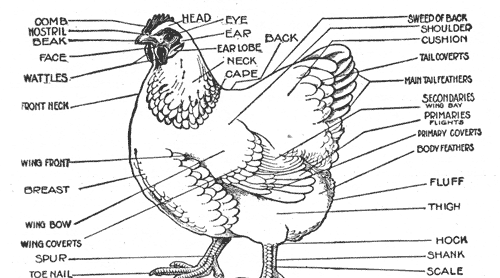
Poultry refers to all birds that are domesticated by man. These include domestic fowl, duck, geese, turkey, guinea fowl, and pigeons.
Importance of Poultry
- Provision of meat and eggs as food for man
- Feathers are used for pillows and mattresses
- Eggs are used for producing vaccines
- Poultry manure (guano) is used to fertilize the soil.
- Poultry industry employs many people
- It is a means of income to poultry farmers
- Birds are high and economical converters of feeds.
- Birds are used for scientific experiments because they mature within a relatively short period.
|
Breeds |
Purpose |
|
White leghorn |
Egg production |
|
Brown leghorn |
Egg production |
|
Shika brown |
Egg production |
|
Plymouth rock |
Dual purpose |
|
Rhode island red |
Dual purpose |
|
Harco |
Dual purpose |
|
Light Sussex |
Meat production |
|
White Cornish |
Meat production. |
|
Types of poultry |
Scientific name |
Male |
Female |
Young ones |
|
Chicken |
Gallus gallus |
Cock |
Hen |
Chick |
|
Turkey |
Meleagris gallopavo |
Stag/ Tom |
Hen |
Poult |
|
Guinea fowl |
Numida Meleagris |
Guinea fowl |
Guinea fowl |
Keet |
|
Duck |
Anas platyrbuchos |
Drake |
Duck |
Duckling |
|
Geese |
Anser spp. |
Gander |
Goose |
Gosling |
Systems of Poultry Production
The systems are:
- Intensive system
- Semi-intensive Extensive system
- Intensive System:
In this system, birds are reared in within a confined environment. Adequate housing, feeding and good hygiene are made available. The system is further divided into:
- Deep litter system
- Battery cage system
- Deep Litter System: Birds (both male and female) are reared together in a suitable room. The floor of the room is concreted and covered with wood shavings which absorbed the water associated with faeces. The floor should be cemented and pen well ventilated. Water and feeds are given provided the wood shavings are changed regularly as the need arise.
Advantages of Deep Litter System.
- It facilitates the management of very large stock.
- It increases the rate of growth and production.
- It maximizes the use of labour.
- It reduces the loss of birds to snakes and thieves.
- Birds are protected from harsh weather conditions.
- The rate of growth and production is increased.
- It requires less capital than the battery cage system.
Disadvantages of Deep Litter System
- cost of constructing the deep litter type of house is high.
- Birds tend to waste the feeds.
- Vices like cannibalism, pecking, fighting, egg-sucking, feathers fluffing may be very rampant.
- The spread of diseases and pests is very rapid.
- Eggs are often stained by faeces on the litters.
- It is very difficult to cull unproductive birds since all of them mix.
- Battery Cage System: In this system birds are housed in individual cages each accommodating 2, 3, or 4 birds per cubicle depending on the type.
Advantages of the Battery Cage System
- The battery system of housing has proved to be the best regarding egg production
- It has efficiency of food conversion
- Reduction in mortality rate.
- The birds are well secured
- There is easy means of administering drugs to them Less breakage of eggs
Disadvantages of the Battery Cage System
- The spread of diseases may be very fast-
- There is high cost of constructing building and equipment
- Fertile eggs cannot be produced and as such there may be a reduction in chicks production
- Lack of freedom for birds which makes the birds to be bored and fatigue
- More eggs are cracked, especially very thin-shelled eggs
- Extensive System:
This is one of the oldest forms of poultry management, where birds are allowed to fend for themselves with little or no assistance and attention from the owners.
This system is subdivided into two forms:
- The fold system
- The free-range system
- Fold System; It is made with light materials which enables it to be moved from one place to another. About 50 to 100 birds are kept within a fold unit.
Advantages of the Fold System
- It is ideal for chick rearing
- It is mobile
- The house is cheap to build
- It can be practised on a small land area
- It can be turned in into the soil as fertilizer.
Disadvantages of the Fold System
- It is not good for commercial production of birds
- Fertile eggs may not be produced
- Eggs are often dirty
- The spread of diseases is high
- It requires much labour in moving the house
Housing of Poultry
- Birds are kept in pens which are made of concrete floor and well roofed
- A hatchery and feed mill unit are constructed in the house
- The pen should be on flat land, not exposed to erosion and wind
- A foot dip containing disinfectants should be constructed
- Electricity must be provided regularly
- Floor space per bird should be about 3 square meters.
Feeding in Poultry Management
- Birds have simple stomach without teeth
- They are given mash which depends on their age and purpose
- They are fed constantly, that is, they eat every time
- There must be a regular supply of clean water
- The mash should be rich in proteins, carbohydrate, vitamins and minerals
- There should be occasional supply of vegetable like waterleaf, tridax and amaranthus.
- Feed and water must be given adlibitum.
Types of Feed Given to Birds
- Chick mash
- Grower marsh
- Layer marsh
- Broiler starter
- Broiler finisher.
Hygiene in Poultry Management.
The following are the hygienic practices that should be observed regularly;
- Remove sick or dead animals from the pens for quarantine.
- Visitors should not be allowed into the poultry house. If permitted, their feet must be dipped into water containing disinfectants.
- The entire building should be disinfected regularly.
- Water bath containing chemicals should be provided at the entrance of the building.
- Drinkers should be washed thoroughly.
- Wet litters and mouldy feeds should be removed.
- External parasites like lice should be controlled.
- Internal parasites should also be controlled by regular deworming the birds.
Other Management Practices in Poultry
- Candling: This is the practice of determining the fertility of the eggs. Each egg is held against a source of light to determine whether the egg is fertile or not. Candling is done between the 9th and the 14th day as the eggs are laid. Candler or Candling machine can be used.
- Incubation: This is the provision of heat to fertilize eggs to enable the embryo to develop into chicks. Incubation can be natural or artificial.
- Sexing: It is the practice of separating male chicks from the females. It is usually done at day old
- Brooding: It involves all the care and attention given to the chicks. It should start at day old. It last to 4 – 6 weeks. Brooding is done in the brooding house.
Pig Management
Pigs are non-ruminant animals. The two main species of pig are Susscrofa and Susvittatu. These are very prolific animals because they mature quickly between 8 – 9 months. They have a short gestation period of 114 days. They are very good and efficient converters of feed into meats.
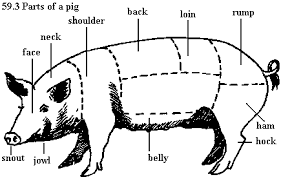
Breeds of Pigs
- Landrace
- Duroc jersey
- Large white
- Large black
- Hampshire
- Welsh
- Chester white
- Berkshire
- Poland china
- Essex saddleback
- Wessex Saddleback
- West African Dwarf
- Tamworth
- Saddleback
Systems of Rearing Pigs
The systems of rearing pigs are extensive, semi-intensive and intensive systems
- Extensive System:
Like other farm animals, the animals are allowed to fend for themselves.
Advantage of Extensive System
- They do not attract any attention in terms of housing, feeding, health care.
- It has little or no capital investment
- The cost of production is low
Disadvantage of Extensive System
- This system affects the growth rate of the animals.
- Diseases incidence of worm infestation are very high
- The animal is exposed to adverse weather condition
- They are exposed to theft
- Semi-intensive System
In this system, pigs are reared partly indoor and partly outdoor. The female pig with or without the male pigs are allowed to run outside. Advantage of Semi-intensive System
- In this system labour requirement is low.
- less feed is required as the pigs graze for food.
- The can easily exercise themselves to prevent fat build-up in the body.
- The system needs less capital investment.
Disadvantage of Semi-intensive System
- Incidence of diseases and parasite infestations are slightly high.
- They are exposed to theft.
- Slow growth rate.
- Intensive System of Rearing Pigs
In this system, pigs are completely raised in houses with concrete floors.
Advantage of Intensive System
- This allows for easy daily cleaning.
- Feeds, water, medications are provided daily in adequate quantity.
- Good sanitation is maintained.
- There is maximum security for the pig.
- The growth rate is high.
Disadvantage of Intensive System
- Feeds conversion is high, hence growth rate is also high.
- The system is capital intensive.
Housing in Pig Rearing
The pen is divided into unit depending on the functions they serve. For example:
- Farrowing Pen: For delivering of the litters.
- Litter Pen: Where newly delivered are kept and given adequate care.
- Mating pen: Where mating between a male and a female pigs is done.
- Growers Pen: Where piglets are kept and given adequate care.
- Sickbay/Isolation pen: where sick animals are kept and treated. While constructing a pigpen, ensures that the walls are built with blocks and iron bars, the roof made with iron sheets or asbestos, the pen well ventilated, the gates should be strong, litters are provided as beddings, shade to keep the building cool all the time.
Feeding in Pig Rearing
Pigs are voracious. They feed on concentrates; tubers like cassava, yam, cocoyam; maize, sorghum and household leftover. Occasionally vegetables are supplied to provide vitamins and minerals. At different stages, pigs are fed with different type of rations. Piglets are given creep feeding 2 weeks after farrowing.
Hygiene in Pig Rearing
Pigs pens need to be cleaned regularly to prevent the occurrence of diseases. The following should be done regularly:
- Clean the pen regularly
- Change on the wallow regularly
- Clean the troughs regularly
- Change the beddings at intervals
- De-worm animals
- Disinfect the pens and carry out dipping against ectoparasites
Common Diseases of Pigs
Common diseases of pigs include:
- Brucellosis or contagious abortion
- Anthrax Enteritis or swine dysentery
- Hog cholera/swine fever
- Transmissible gastroenteritis
Rabbits Management
They are mono-gastric animals which belong to the family of Leporidae. They have a simple stomach like that of pigs. The meat is very nutritious and low in cholesterol. It is a suitable alternative to poultry meat. It is better than poultry meat.
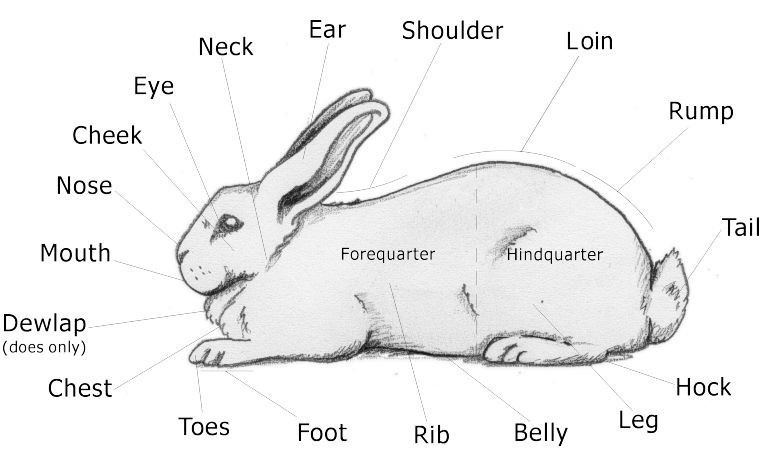
Breeds of Rabbits
- California white
- California red
- Flemish giant
- Chinchilla
- New Zealand white
- New Zealand red
- Angora
- Blue Beveren
Housing in Rabbits Rearing
- Rabbits are normally housed in hutches or cages.
- It can be constructed in single units, double or tree-tie units.
- The floor space is covered with wire mesh which allows for disposal of the faeces.
- The hutches are made of wood with wire netting and asbestos roofing.
- The cages should be 1m from the ground.
- Nest boxes should be provided for adequate care of the young ones.
Battery Cage: This can be used for fasteners that are raised from 4 weeks (weaners) to the point of slaughter
Feeding in Rabbits Rearing
They are fed with:
- Concentrates in mash form
- Green feeds such as vegetable leaves, sweet potato leaves, Aspillia Africana, Stylos anthesgracilis and Centrosema spp
- Grower mash
- Adult Buck and Doe should be given up to 90 – 120g of mash per day
- Pregnant Doe should be given up to120 – 140g of mash per day for 14 days after mating
- Weaners should be fed ad libitum
- Freshwater should be put into the watering trough every morning
Hygiene in Rabbits Rearing
The following hygienic practices should be carried out to ensure successful management of rabbit’s production
- Remnant feed should be removed every morning
- Feeders and water troughs should be cleaned daily
- The floor should be cleaned and disinfected at intervals
- Deworm them with appropriate drugs
- Cut bushes around the hutches
- Isolate sick animals
- Burry or burn dead animals.
Importance of Rabbit Rearing
- It is a source of meat
- It serves as a source of skin or pelt
- Its wastes can be used as manure
- For research purpose
Problems Militating against Rabbit Production in Nigeria
- Unpredictable breeding behaviour of rabbit
- Incidence of respiratory diseases e.g. snuffles and pneumonia
- Inadequate sanitation and proper sanitation programmes
- High nest-box mortality of litters
- Lack of ability to embark on mass production, because most operation in rabbitry cannot be automated
- It is labour intensive.
- Lack of capital also impedes large investment in rabbitry
- Inadequate supply and high cost of concentrate feed.
Common Diseases of Rabbit
Rabbits are infected with the following diseases:
- Coccidiosis
- Enteritis
- Ear canker
- Bloat
- Myxomatosis
- Helminthiasis
- Ringworm
- Sore-hock
Goats Management
Goats are ruminants and very hardy type of animal which are regarded as scavengers.
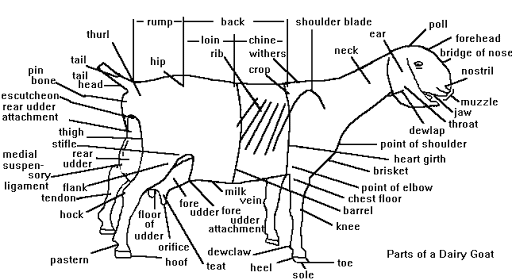
Importance of Keeping Goats
Goats are reared for the following purposes:
- Goats provides meat as a source of protein.
- Goats supply good nutritious milk.
- Goats provide hides used in the manufacturing of leather works.
- They provide hair(mohair) used for making carpets and bags.
- It is a source of income to the government.
- They are used for many social and religious ceremonies.
- The droppings from goats are used as manure on the soil.
Factors Responsible for the Success in Goats Production
- Goats thrive on a variety of feeds.
- They eat almost everything that is not soiled.
- They have high efficiency of feed conversion.
- Goats have short gestation interval.
- They are relatively resistant to diseases when compared with other farm animals.
- They can withstand many adverse environmental conditions.
- Goats have high fertility and reproductive rates.
Breeds of Goats
- Sokoto red/Maradi
- Bornu red
- Kano brown
- Bauchi Sahel/Fulani/Desert Goats
- West African Dwarf Goats
- West African long-legged Goats
- East African small Goats
Exotic Breeds of Goats
- anglo-Nubian
- Saanen
- Toggenburg
- Angora
Systems Used for Goats Keeping
The three systems used for rearing goats are similar to the ones used for all other ruminants. These are extensive, semi-intensive and intensive systems.
Housing in Goats Rearing
Their houses are normally built with asbestos or thatch material for roof, concrete floor. Litters as bedding are placed on the floor. Shades are provided for goats. Goats can also be reared comfortably by tethering. Tethering entails tying the goat to a tree or stand with freedom to an extent, to enable it to graze around the tree or stand.
Feeding in Goats Rearing
Goats feed on roughages and concentrates. At times they are giving the peelings of yam, cassava, groundnuts, guinea corn, etc. They browse on a variety of plants resources such as herbs, shrubs, trees or their parts. Other supplement feeds include blood meal, groundnut cake, fish meal, vitamins and minerals.
Hygiene in Goats Rearing
- Their houses should properly cleaned, washed and disinfected.
- Beddings should be removed at intervals
- The animals should be occasionally dewormed and dusted
- Feeding and water troughs should be cleaned regularly
- The sick animal should be culled or isolated
Sheep Management
Sheep belong to the genus Bovidae which is the domesticated species. Sheep was first domesticated in Asia and gradually extended to all parts of the world.
Within Africa, sheep are important in Kenya, Mali, Ethiopia, Tanzania and northern Nigeria.
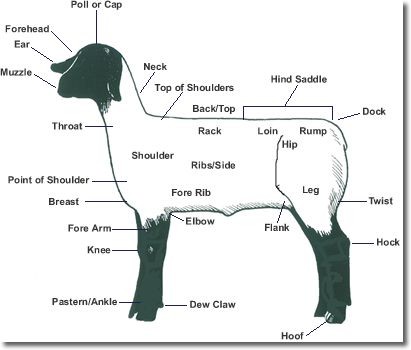
Breeds of Sheep
- Ouda/Uda
- Merino
- Y’ankassa
- Balami
- Dorset horn
- Lohi
- Nellore
- West African dwarf sheep
Ho using in Sheep Rearing
Housing in sheep rearing is similar to that obtained in goats keeping.
- The house should be made of concrete, the roof of asbestos or iron sheets and floor of concrete
- The gates should be made of iron bars and barbed wires
- Bedding of straws or wood shavings should be provided
- Provide hay racks for feeding sheep
- The house should be well ventilated
Feeding in Sheep Rearing
- They can be raised entirely on roughages like grasses and legumes.
- Feed supplements like grains, concentrates, hay and silage are also essential.
- Feed additives like mineral salts and vitamins are also supplied to them.
- Clean water should be provided at regular intervals.
- Chopped cassava tubers and plantain leaves should be provided.
- The young sheep be fed more on proteins.
Hygiene in Sheep Rearing
- Sheep should be vaccinated with appropriate drugs
- They should be de-wormed and dusted at regular intervals
- Clean feeding troughs and water troughs regularly
- The surroundings should be kept clean and bushes around cut down.