
Fishery I
Agricultural Science JSS 2 Third Term
WEEK 1
Fishery I
Performance Objectives
Student should be able to:
1. Define fishery.
2. Classify fishes on the basis of habitat and morphology.
Content
Definition of fishery and fish farming
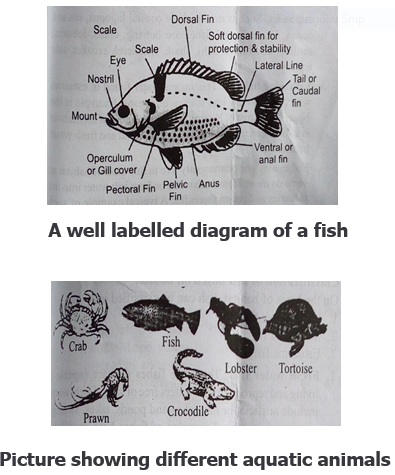
Fishery can be defined as a branch of agriculture which deals with the production of fishes and other aquatic animals.
On the other hand, the artificial rearing of fishes in specially constructed ponds and other enclosures; in coastal waters, lagoons and reservoirs until they reach table size is called FISH FARMING. A person who sells fish is referred to as a FISHMONGER.
Importance of Fish Farming
Fish farming is important to man in the following ways:
1. It serves as a source of employment for fish farmers.
2. It serves as a source of income to fish farmers and traders.
3. It reduces the pressure of fishing in natural waters e.g rivers, seas and lakes.
4. It is a source of food rich in protein, vitamins and minerals for man.
5. Source of raw materials for industry.
6. Source of foreign exchange.
7. Source of livestock feed e.g fish meal.
8. It helps in the production of sport fish e.g swordfish.
Classification of Fishes
Fishes can be classified based on the following:
1. Habitat
2. Morphology